
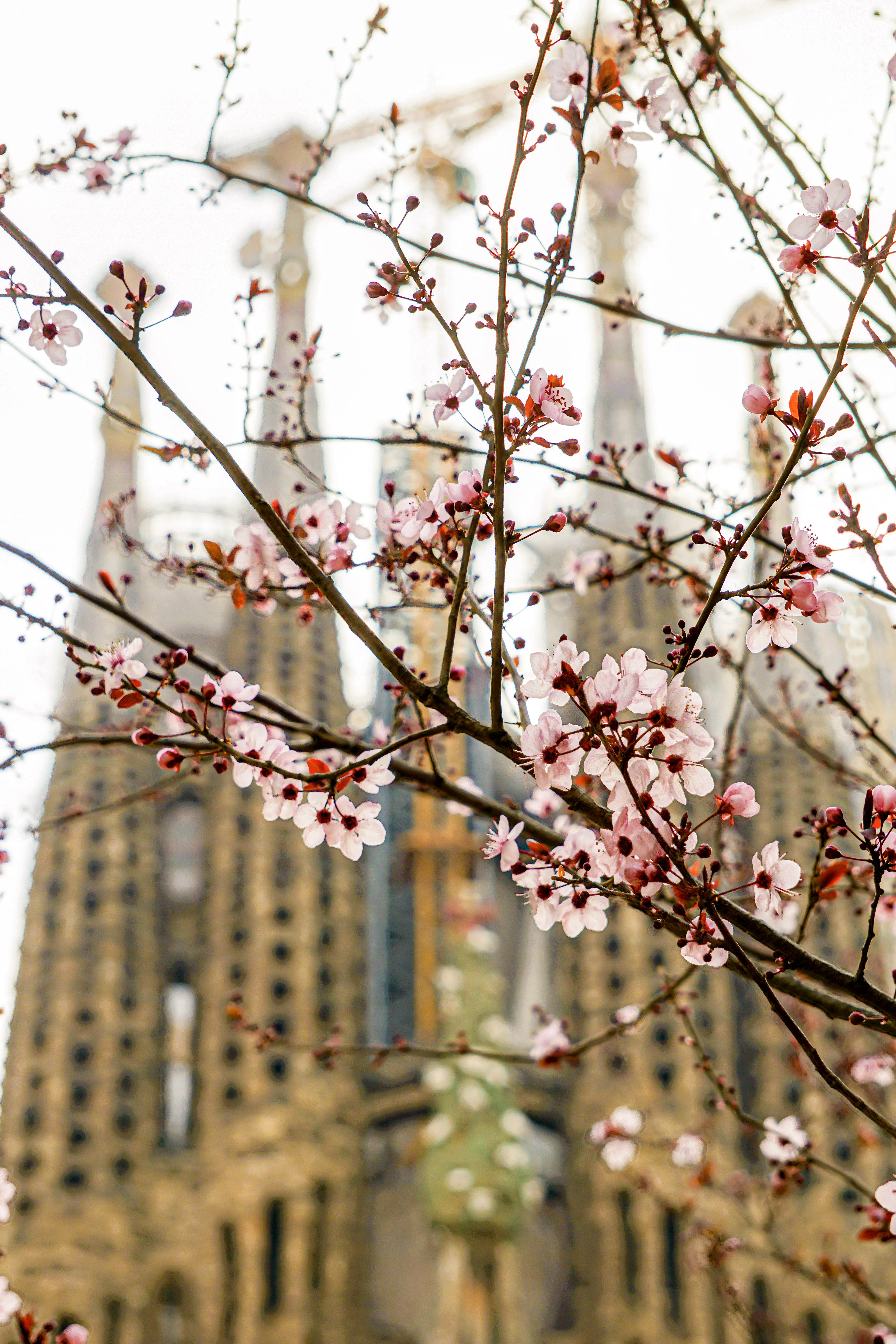
Eixample
A grid drawn for light, filled with dreams in stone
When the medieval walls came down in the 19th century, engineer Ildefons Cerdà drew a vast grid of octagonal blocks with cut corners, designed so air, light and traffic could move freely. The bourgeoisie then filled it with Modernisme: Gaudí, Domènech i Montaner and Puig i Cadafalch competing façade by façade along Passeig de Gràcia.
Today the Eixample is the city’s most populated district and its showroom. The Sagrada Família rises over the Dreta, while the Esquerra and Sant Antoni feel more everyday. Recent green axes such as Consell de Cent have turned some streets into shaded promenades, a change that has been praised in Europe, challenged in court and blamed for rising rents. Walk it and judge for yourself.
Sagrada Família
Still growing after more than a century, and still the building that silences almost everyone who steps inside when the light hits the stained glass.
Best for: Timed tickets booked ahead.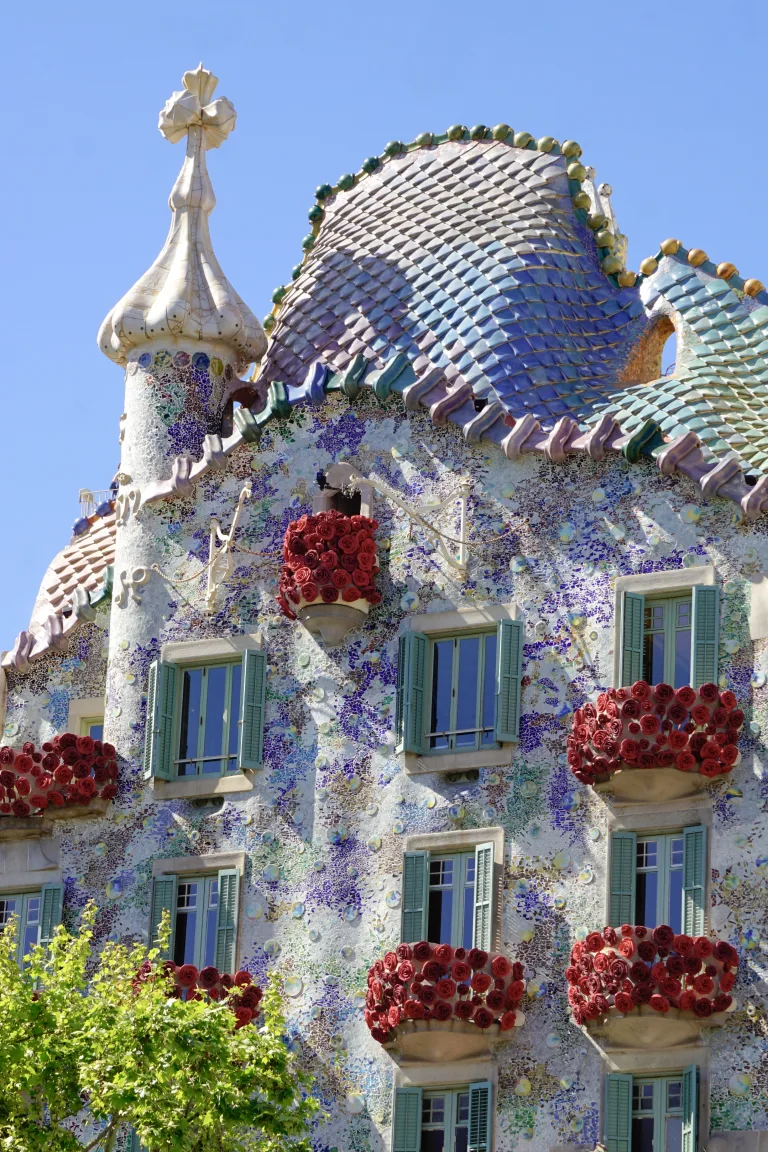
Casa Batlló
Bone-like balconies, a dragon-scale roof and an interior that feels like being underwater.
Best for: Gaudí lovers and rainy days.Read guide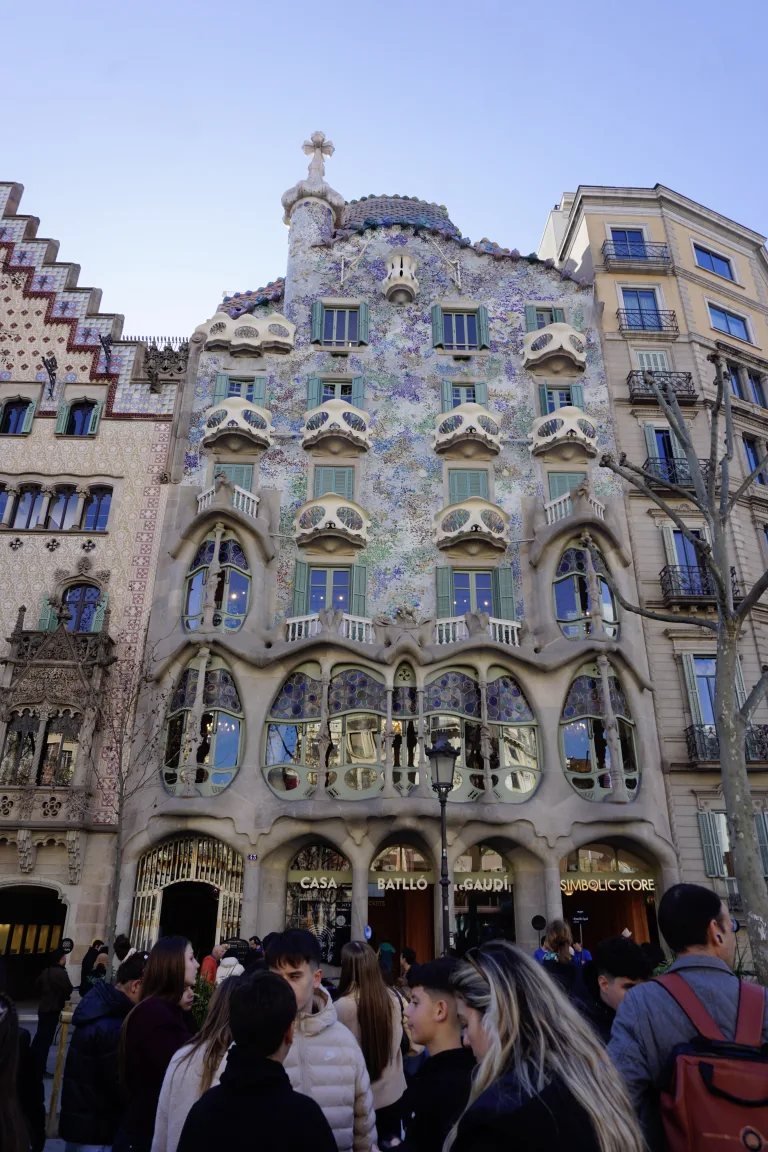
Passeig de Gràcia
The Block of Discord, Casa Milà (La Pedrera) and the city’s most elegant shop windows, best seen at a slow pace.
Best for: Architecture walks and window-shopping.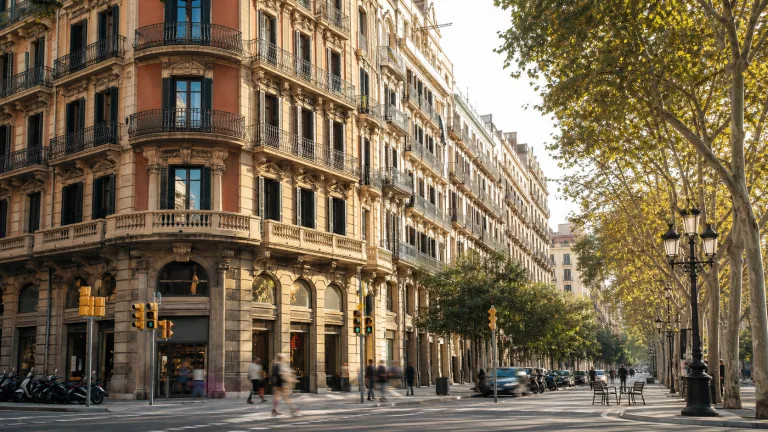
Consell de Cent green axis
Benches, trees and playgrounds where cars used to cross the city: a glimpse of how the Eixample could feel.
Best for: A quiet coffee between sights.Sant Antoni
A restored iron market, Sunday book stalls and some of the city’s most lively bars around Carrer del Parlament.
Best for: Locals’ weekends and vermouth.Plan your time
Ways to spend a day in Eixample
Gaudí morning
Sagrada Família at opening time, then walk or ride to Passeig de Gràcia for Casa Batlló and the outside of La Pedrera.
Slow Eixample
Coffee on the Consell de Cent green axis, the Mercat de Sant Antoni, and a late lunch in the Esquerra.
Evening light
Passeig de Gràcia at golden hour, when the façades glow, then dinner around Enric Granados.
Honest take
The beautiful and the complicated
What we love
The generosity of the grid: wide pavements, cut corners full of light and a city where world-class architecture sits next to the neighbourhood bakery.
What to know
The area around the Sagrada Família is crowded and heavily commercial. Eat a few streets away, keep your bag closed in queues and do not expect bargains on Passeig de Gràcia.
Eixample FAQ
What is the Eixample famous for?
Its 19th-century grid designed by Ildefons Cerdà and its Modernista buildings, including the Sagrada Família, Casa Batlló and Casa Milà.
Is the Eixample a good area to stay in Barcelona?
Yes. It is central, well connected and usually quieter at night than the old town, with many hotels and restaurants.
What are the green axes in the Eixample?
Streets such as Consell de Cent where traffic was reduced and space was given to trees, benches and pedestrians. Parts of the project have faced legal challenges.
Can I walk from the Sagrada Família to Casa Batlló?
Yes, it takes around 25 to 30 minutes on foot through the Eixample, or a few stops on the metro.