Park Guell Barcelona guide
Where Barcelona learns to dream
Beyond the dragon and the postcard views, Gaudi left a hillside full of riddles, stone paths, mosaics and city views. The best visit feels less like ticking off an attraction and more like following a story downhill.
Buy tickets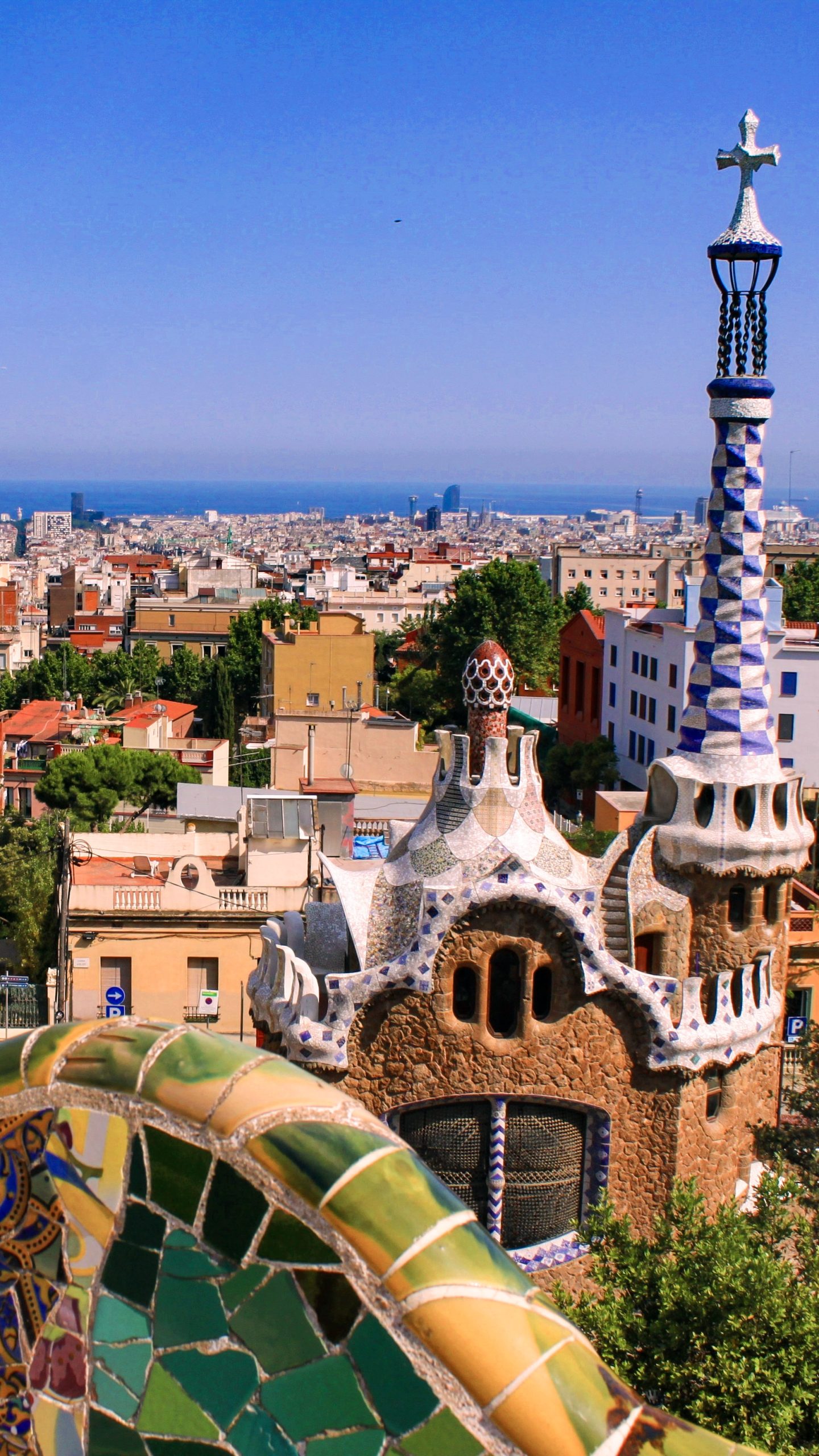
Park Guell guide
Why Park Guell is more than the dragon
There is a moment, somewhere on the climb above Barcelona, when the city begins to change. The traffic fades. The streets grow steeper. Palm trees lean into stone walls, cicadas take over the soundtrack, and flashes of blue Mediterranean appear between rooftops.
Then, almost without warning, architecture stops behaving like architecture. Columns bend. Walls ripple. Stone becomes a wave, a cave, a tree.
Welcome to Park Guell, but perhaps not the Park Guell you thought you knew. Forget, for a moment, the famous mosaic dragon waiting patiently for another thousand photographs. The real adventure begins when you wander away from him.
Park Guell guide
A utopia that never quite happened
Here is the first twist in the tale: Park Guell was never meant to be a park.
In 1900, industrialist Eusebi Guell commissioned Antoni Gaudi to create an ambitious residential development inspired by the garden-city movement associated with England. The idea was extraordinary: an exclusive community surrounded by nature, overlooking Barcelona.
The project failed commercially. Only two houses were built on the residential plots, and the grand experiment eventually came to an end. Years later, Guell’s heirs sold the property to Barcelona City Council, and in 1926 it opened as a public park. In 1984, UNESCO included Park Guell within its World Heritage listing of Gaudi’s works.
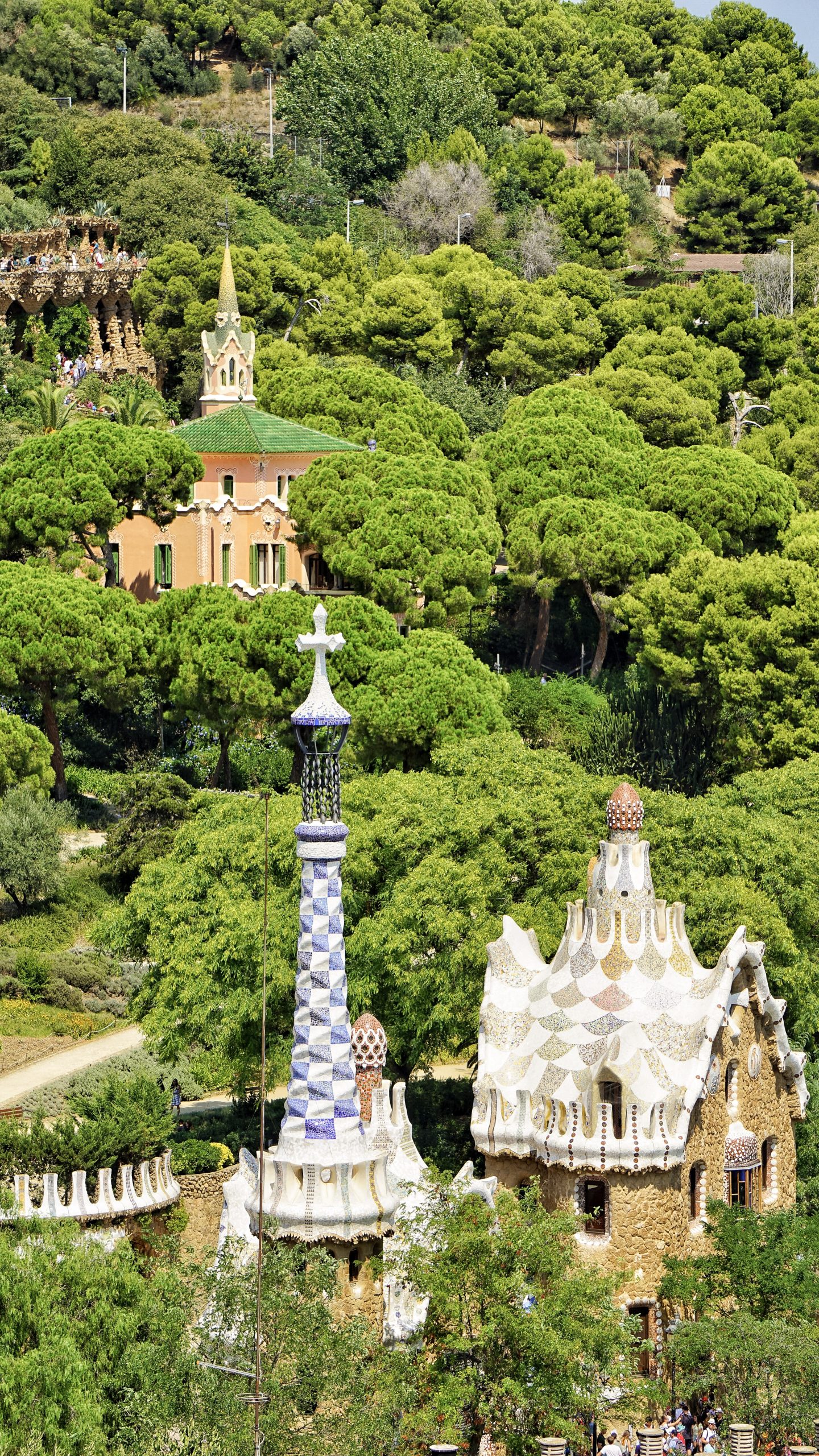
A failed neighbourhood became a masterpiece.
Park Guell guide
The best way to visit: follow the park backwards
Most visitors naturally gravitate toward the monumental entrance on Carrer d’Olot. Try thinking differently. Instead of treating Park Guell as a checklist, imagine it as a slow descent through Gaudi’s imagination.
Head upward. Let the city disappear for a while. Begin near the rougher, quieter landscape of the hill. This is where Gaudi makes more sense.
High above the monumental core rises Turo de les Tres Creus, the Hill of the Three Crosses. The architecture here feels almost prehistoric: rough stone, sky and Barcelona unfolding below.
Park Guell guide
Follow the stone instead of the crowd
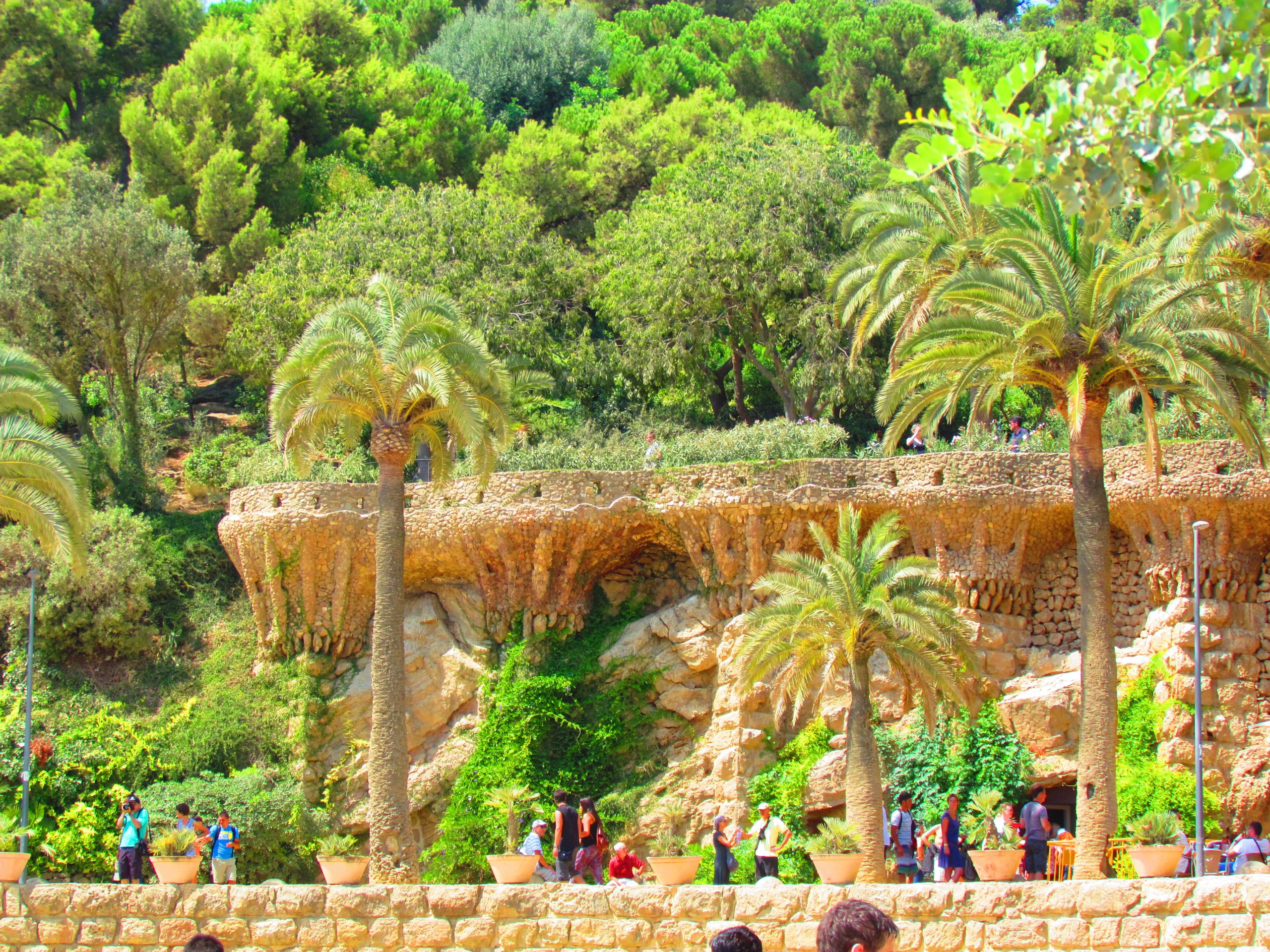
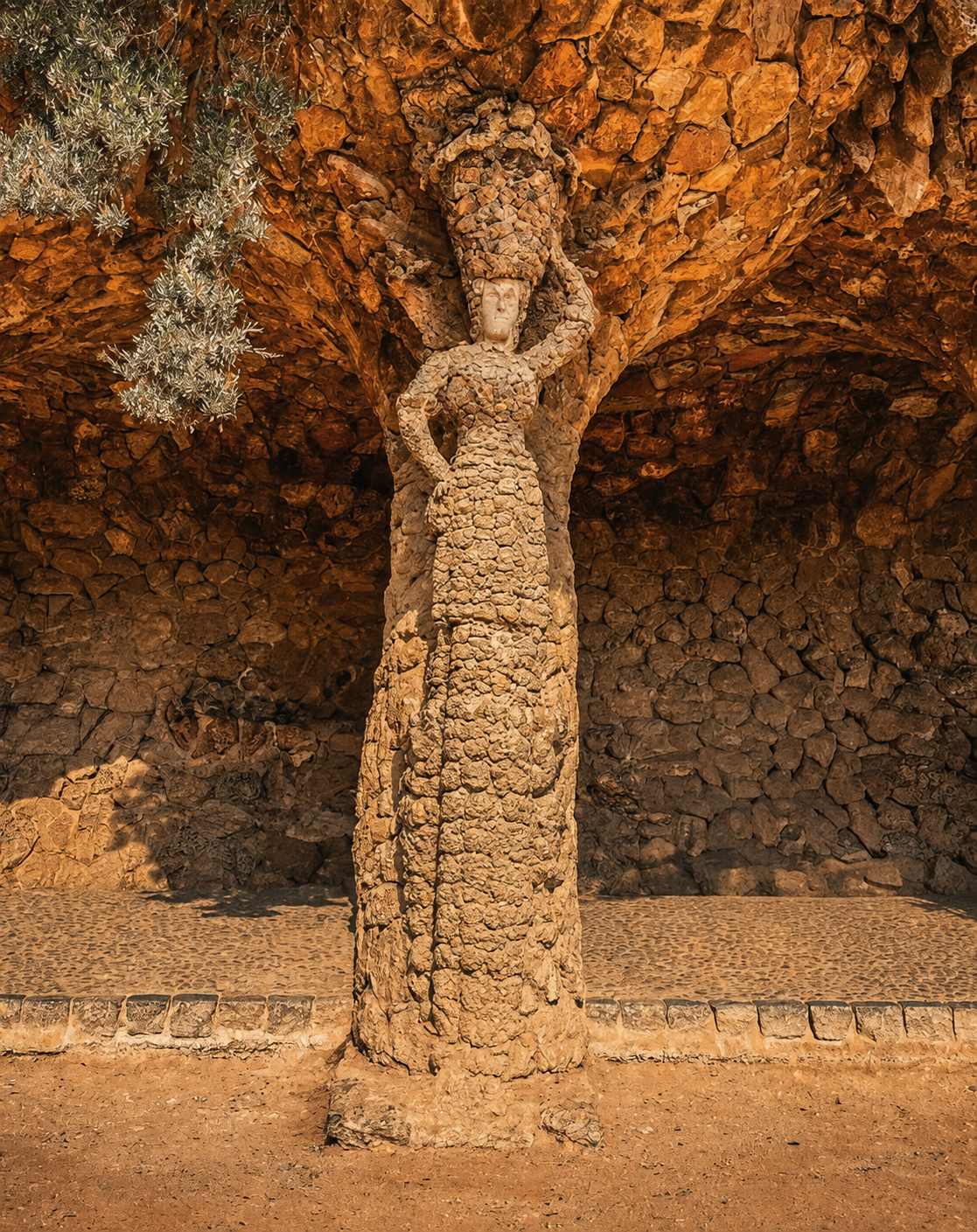
Now descend through Gaudi’s system of pathways and viaducts. This may be the most underrated part of Park Guell. Gaudi designed three main viaducts, originally intended to carry carriages uphill through the residential development.
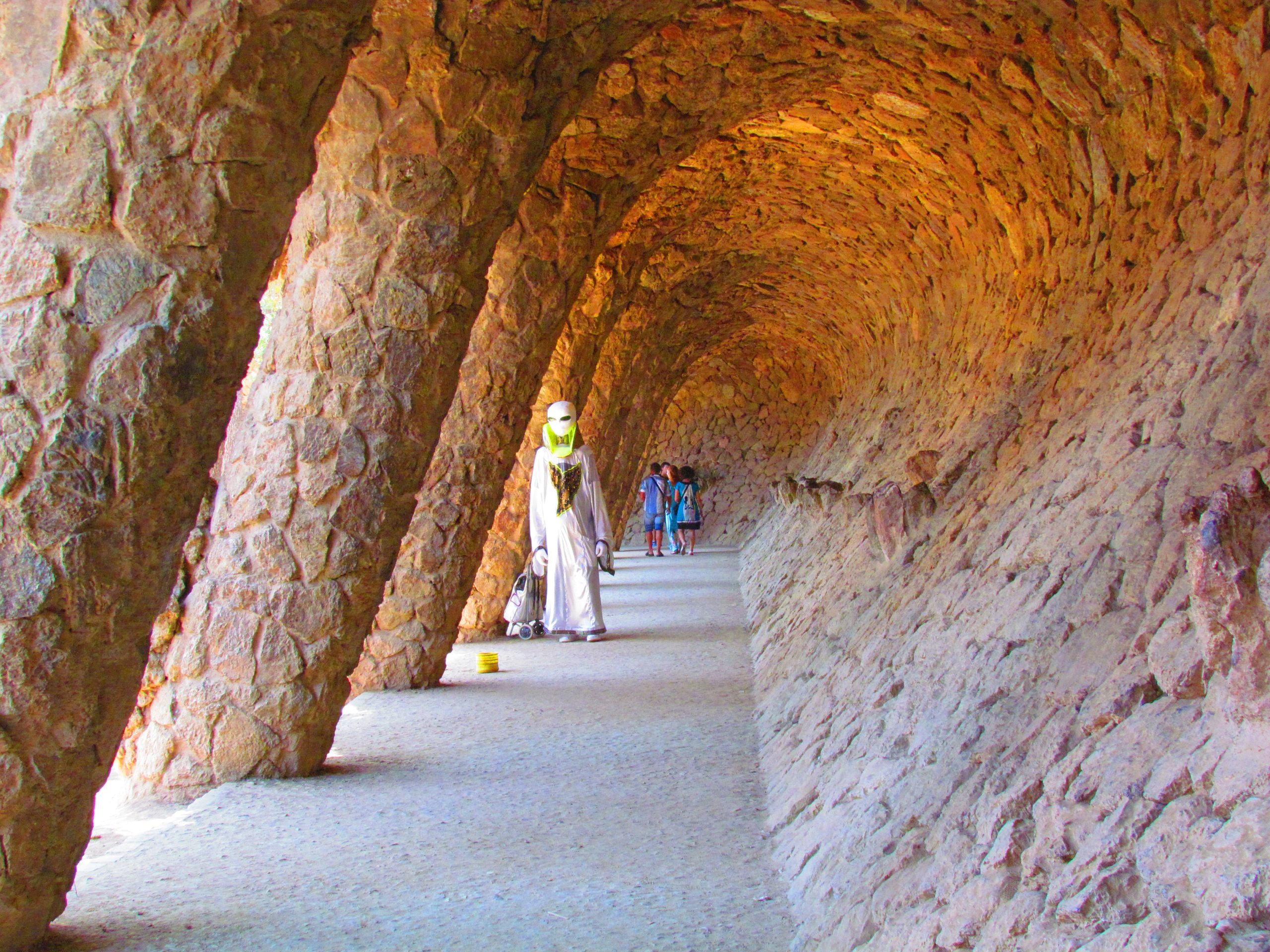
Much of their rough stone came from the site itself. Columns lean instead of standing obediently straight. Walls curve. Vaults resemble caves. The structures appear less constructed than excavated, as though the hill had decided overnight to grow an architecture of its own.
Park Guell guide
The quiet cool of the viaducts
Walk underneath the viaducts and the temperature changes. Footsteps echo. Sunlight slips between columns. For a few seconds, Barcelona feels very far away.
This is the part of Park Guell that many visitors miss because they rush toward the famous monumental zone. Give it time: the stone paths explain Gaudi’s relationship with the hill better than any postcard view.
Park Guell guide
Then find the dragon
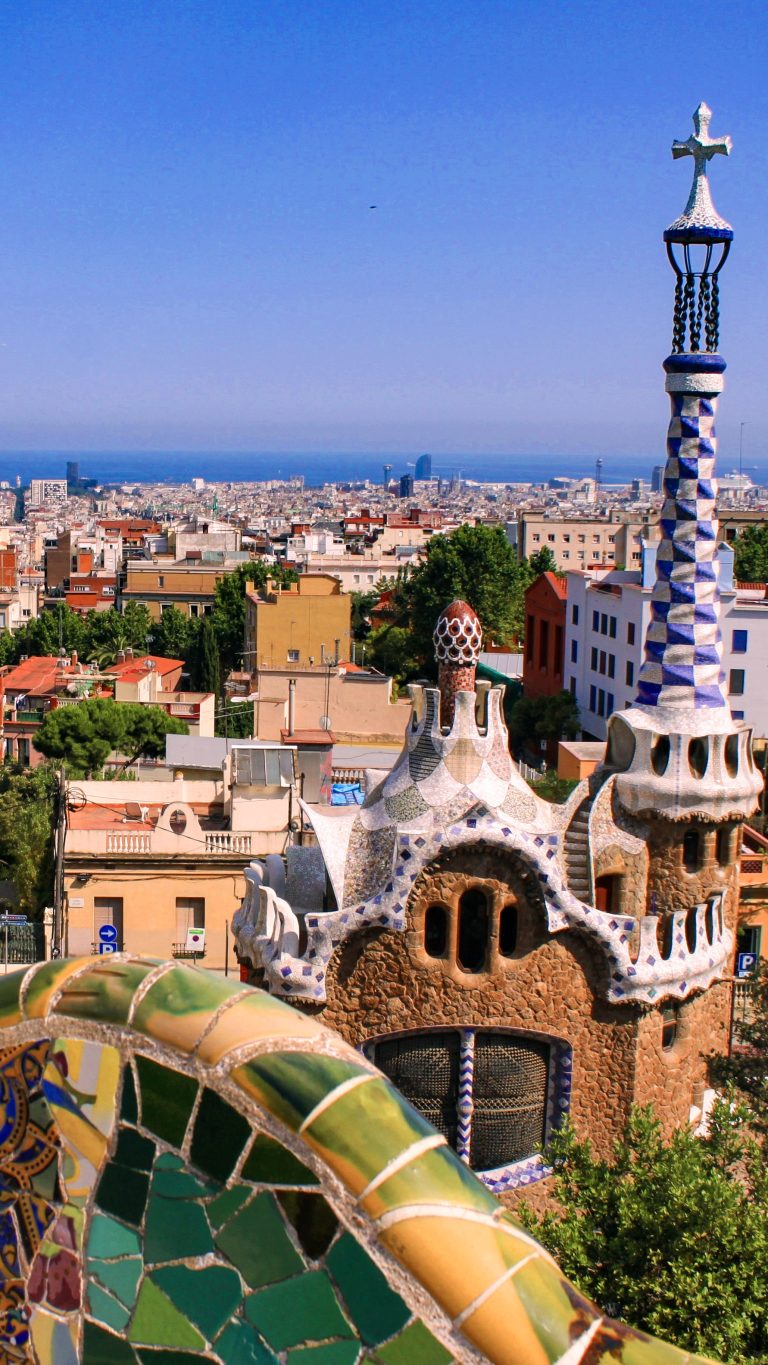
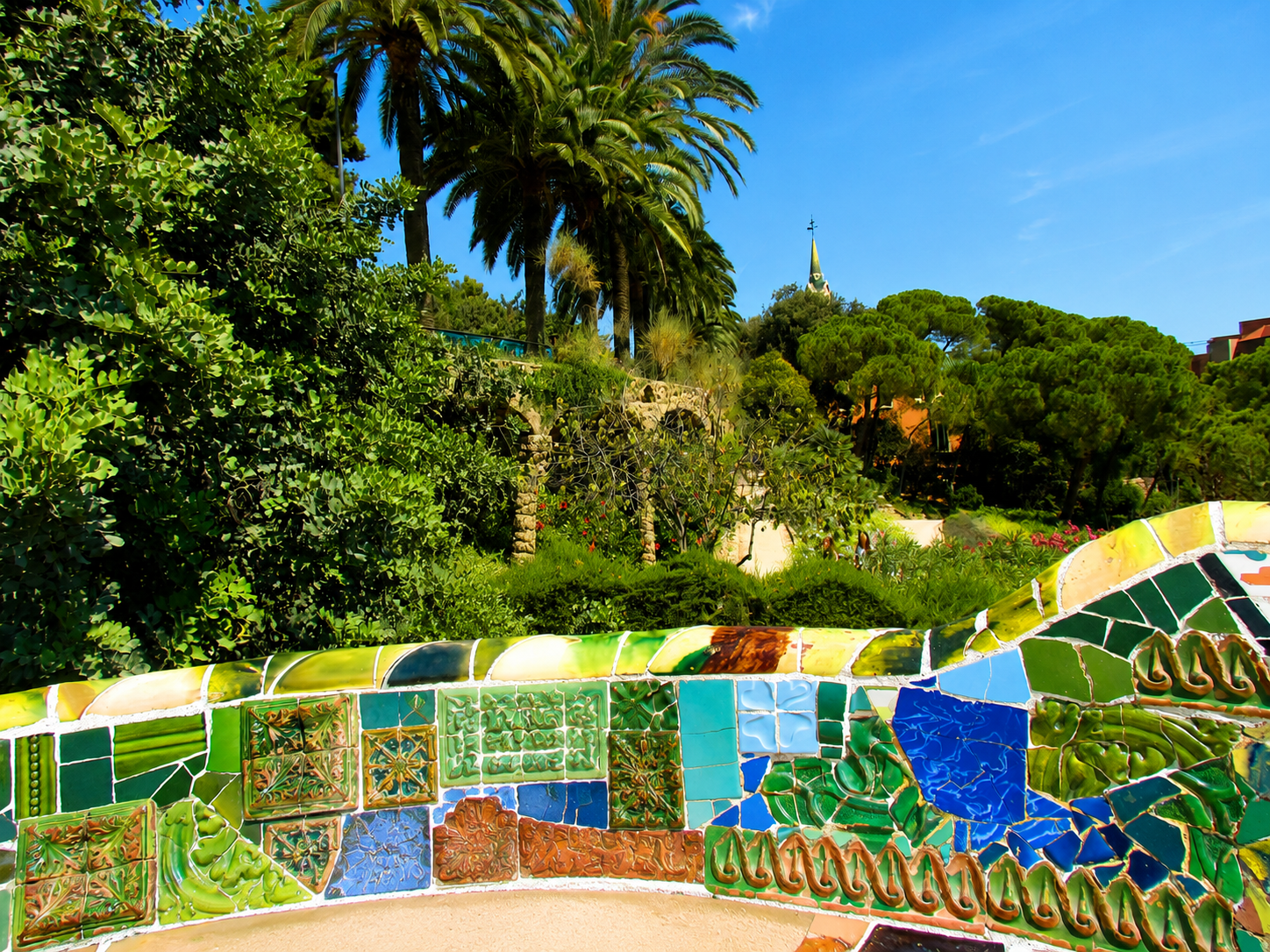
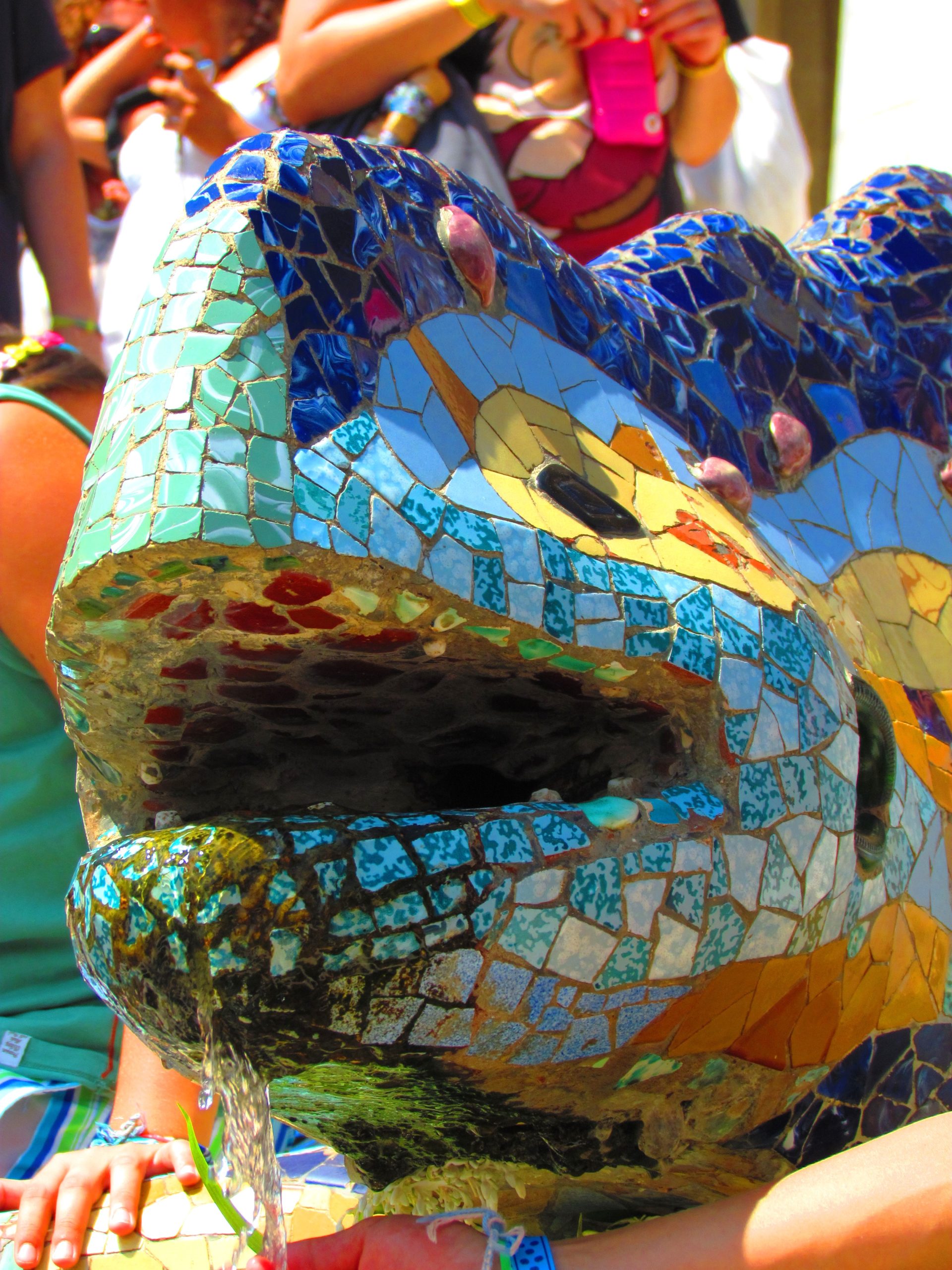
Eventually, of course, you should meet him. Halfway along the monumental staircase sits one of Barcelona’s most photographed creatures: the colourful mosaic animal commonly called the dragon, or el drac.
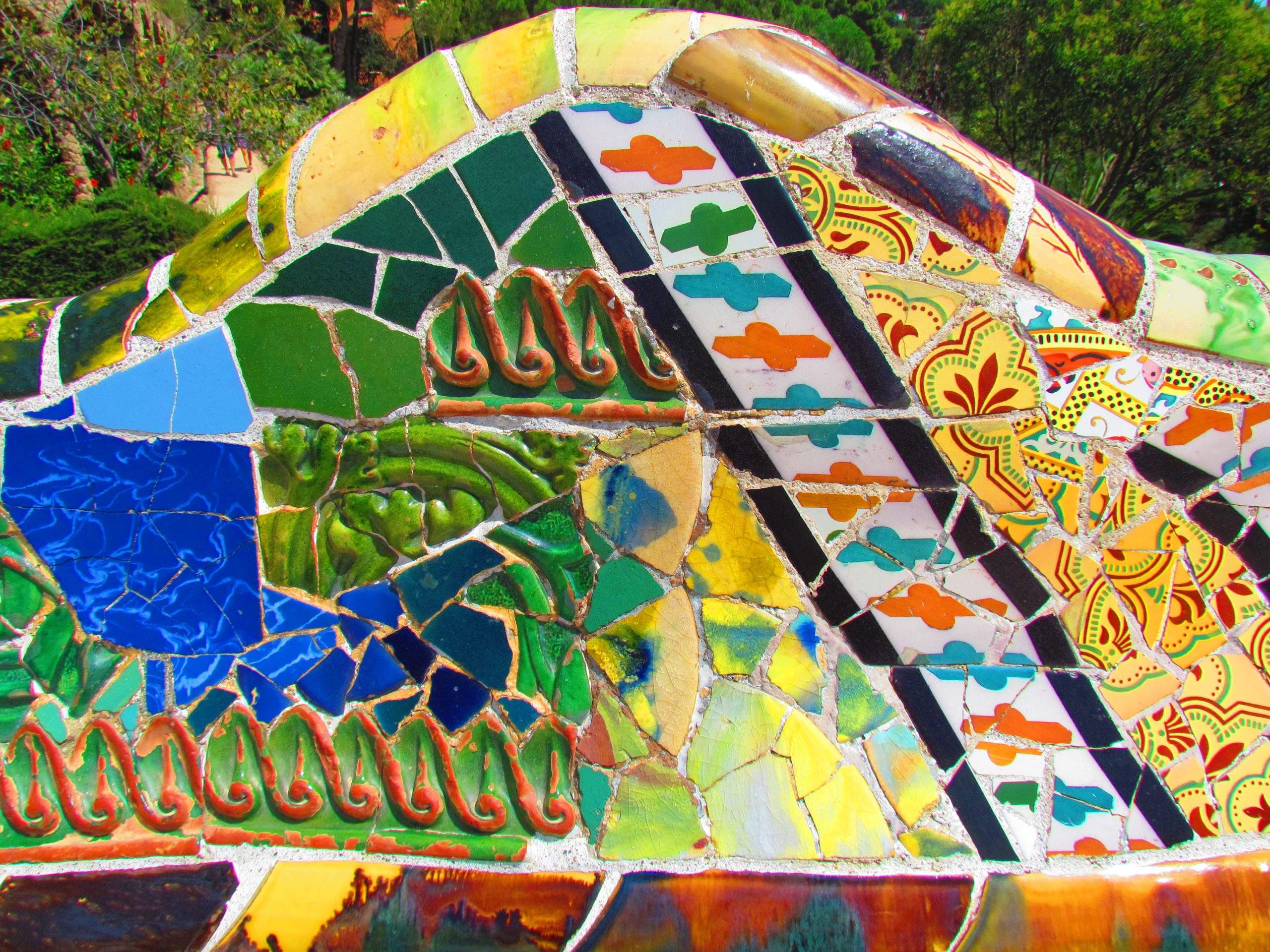
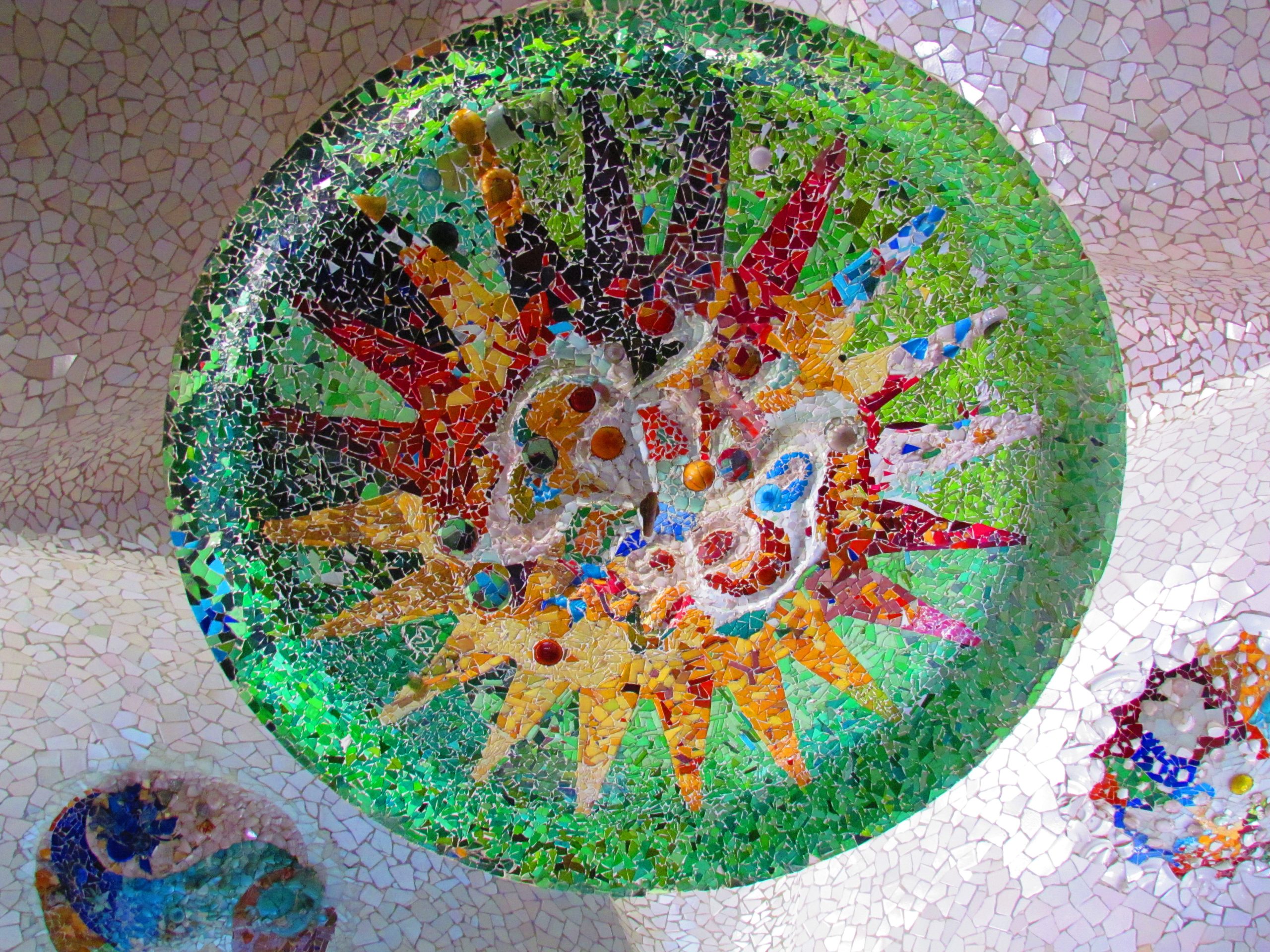
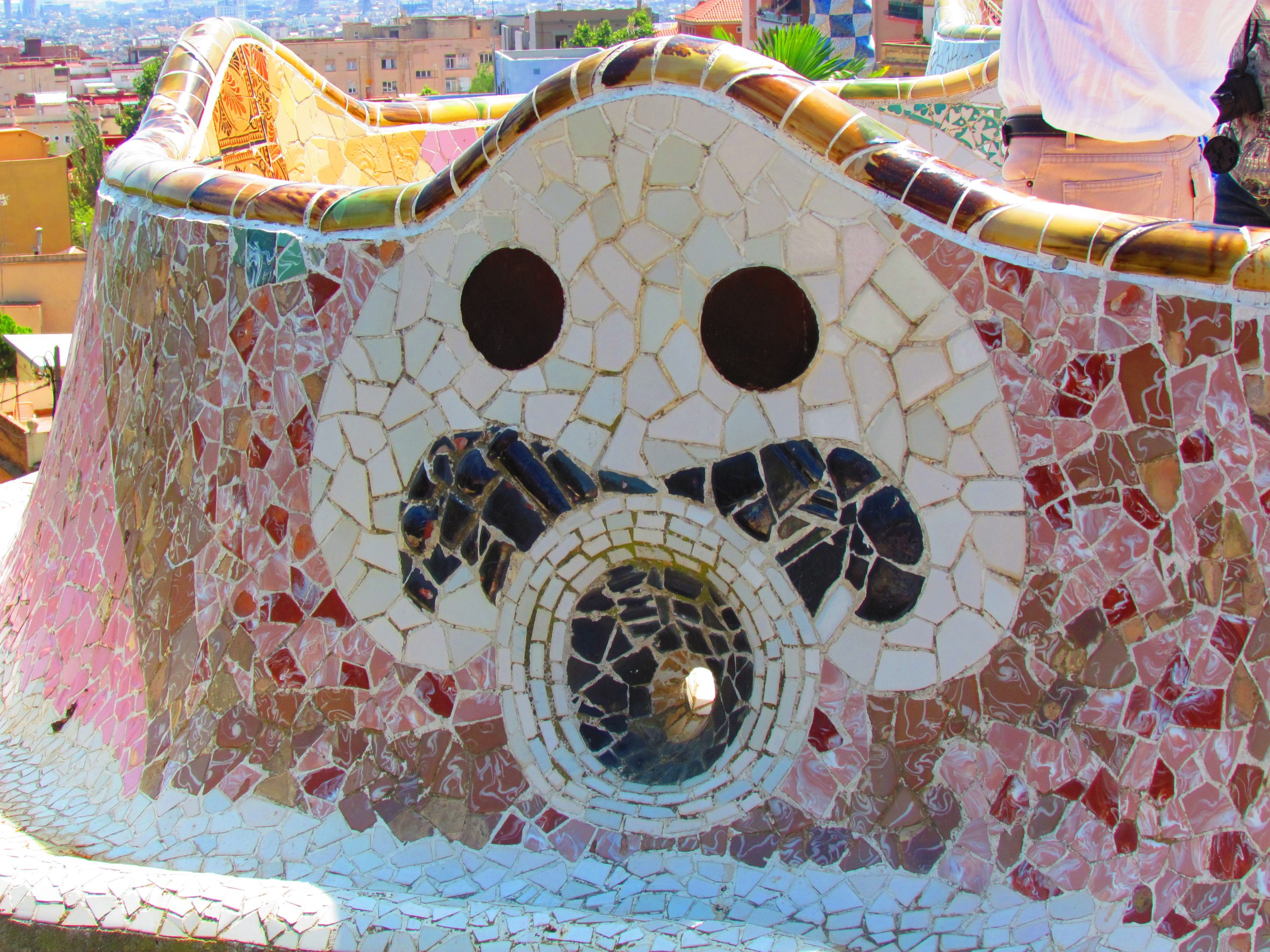
But do not simply photograph it. Look at its skin. The technique surrounding you is known as trencadis, the mosaic method created from irregular fragments of ceramic, tile and other materials that became inseparable from Gaudi’s visual language.
Park Guell guide
Look up in the Hall of Columns
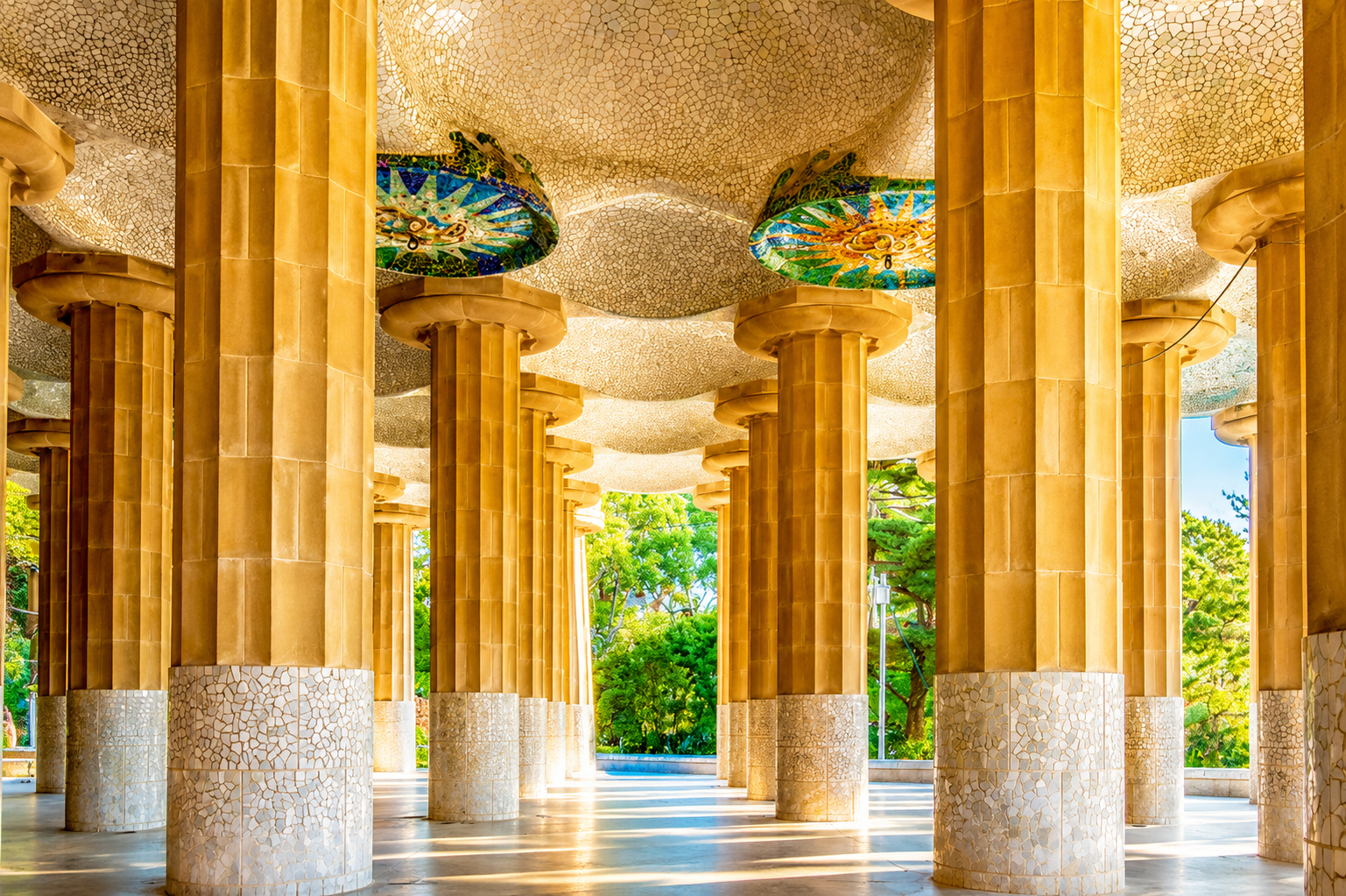
Nearby, enter the Hypostyle Room. The forest changes. Stone replaces pine. Columns rise around you, 86 of them, supporting the enormous square above. This space was originally conceived as the market for the residential community that never fully materialised.
But do not only look between the columns. Look up. There is another clever layer beneath all this beauty: the monumental square above was engineered as part of a rainwater collection system.
At Park Guell, decoration and infrastructure keep flirting with each other. Beauty has a job to do.
Park Guell guide
Sit on a wave above Barcelona
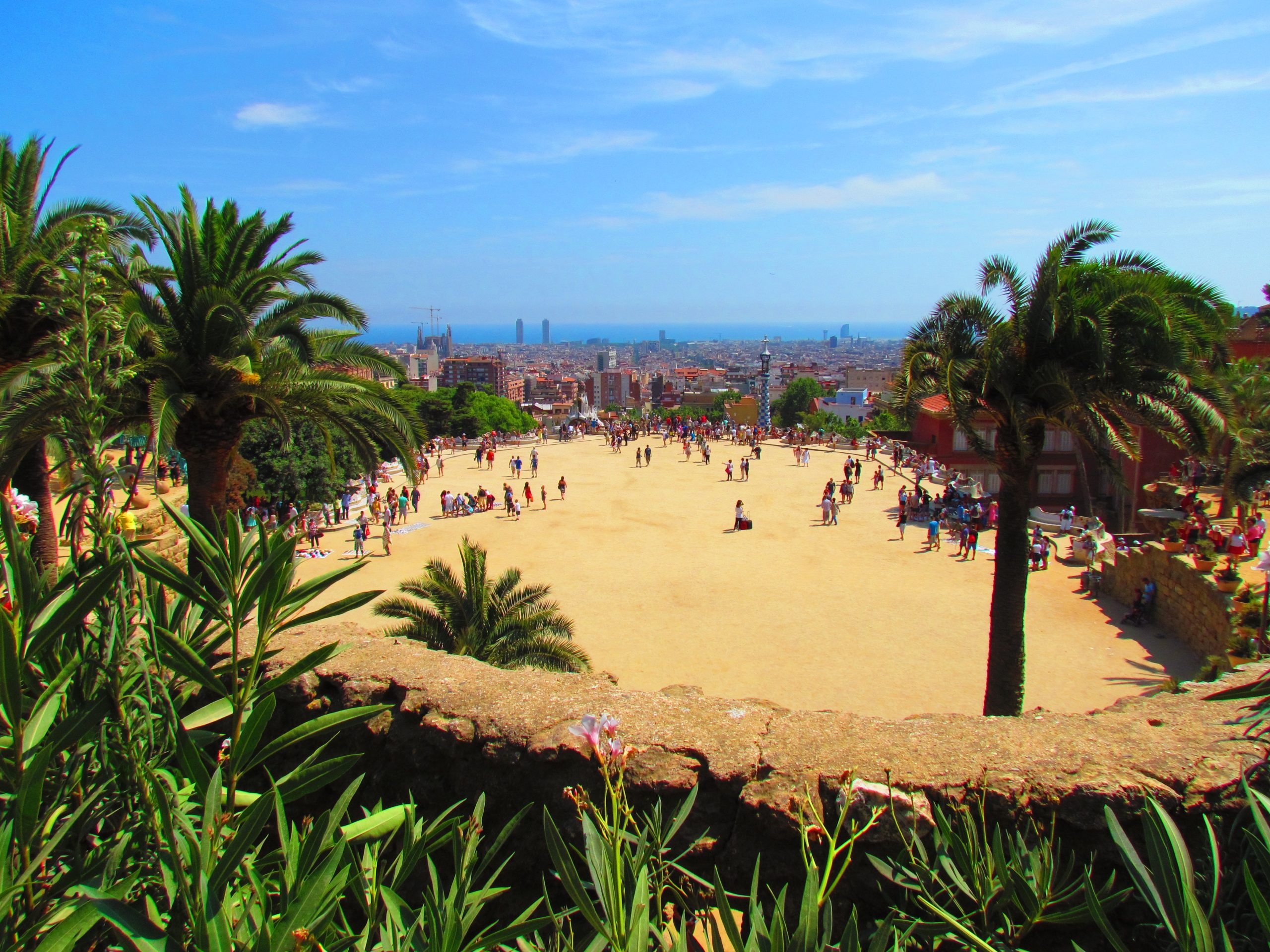
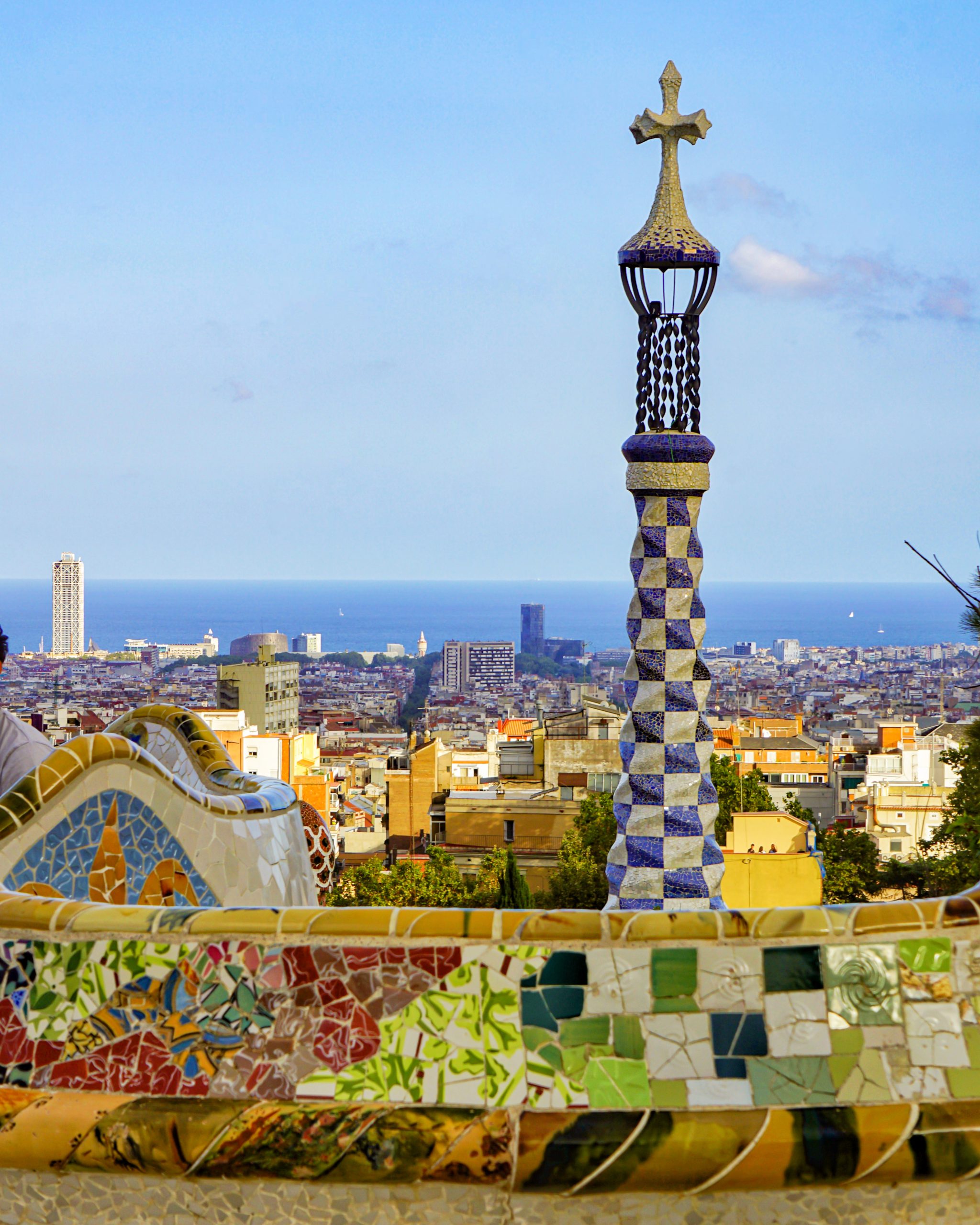
Climb onto the great open space traditionally known as the Greek Theatre, today the Nature Square. Then find the famous serpentine bench. It curves around the edge like a ribbon dropped from the sky.
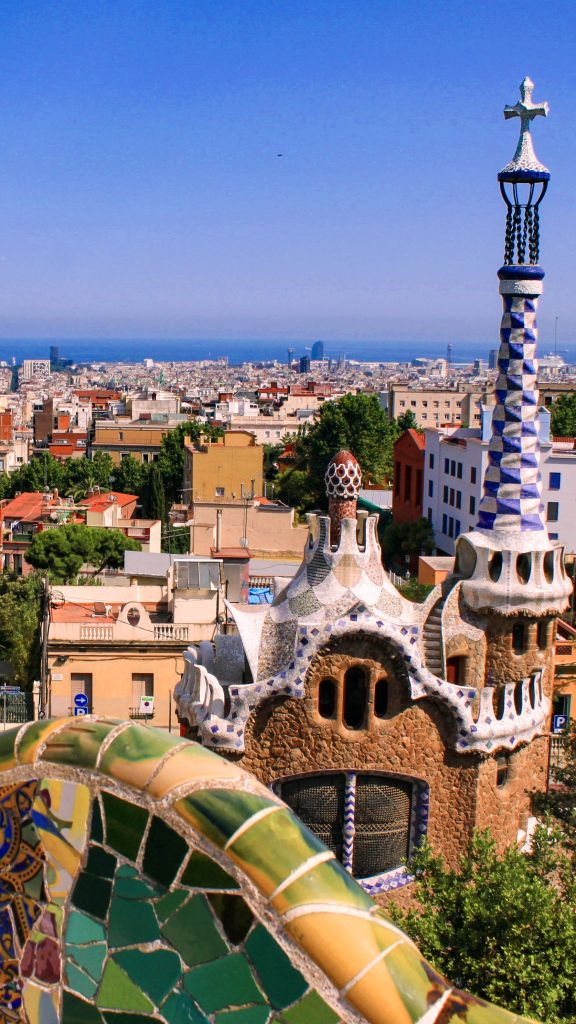
Sit down. This may be one of the rare occasions when doing absolutely nothing is an essential part of sightseeing. Ahead lies Barcelona. Rooftops tumble toward the sea. The skyline rises through the haze.
Park Guell guide
Park Guell has two rhythms
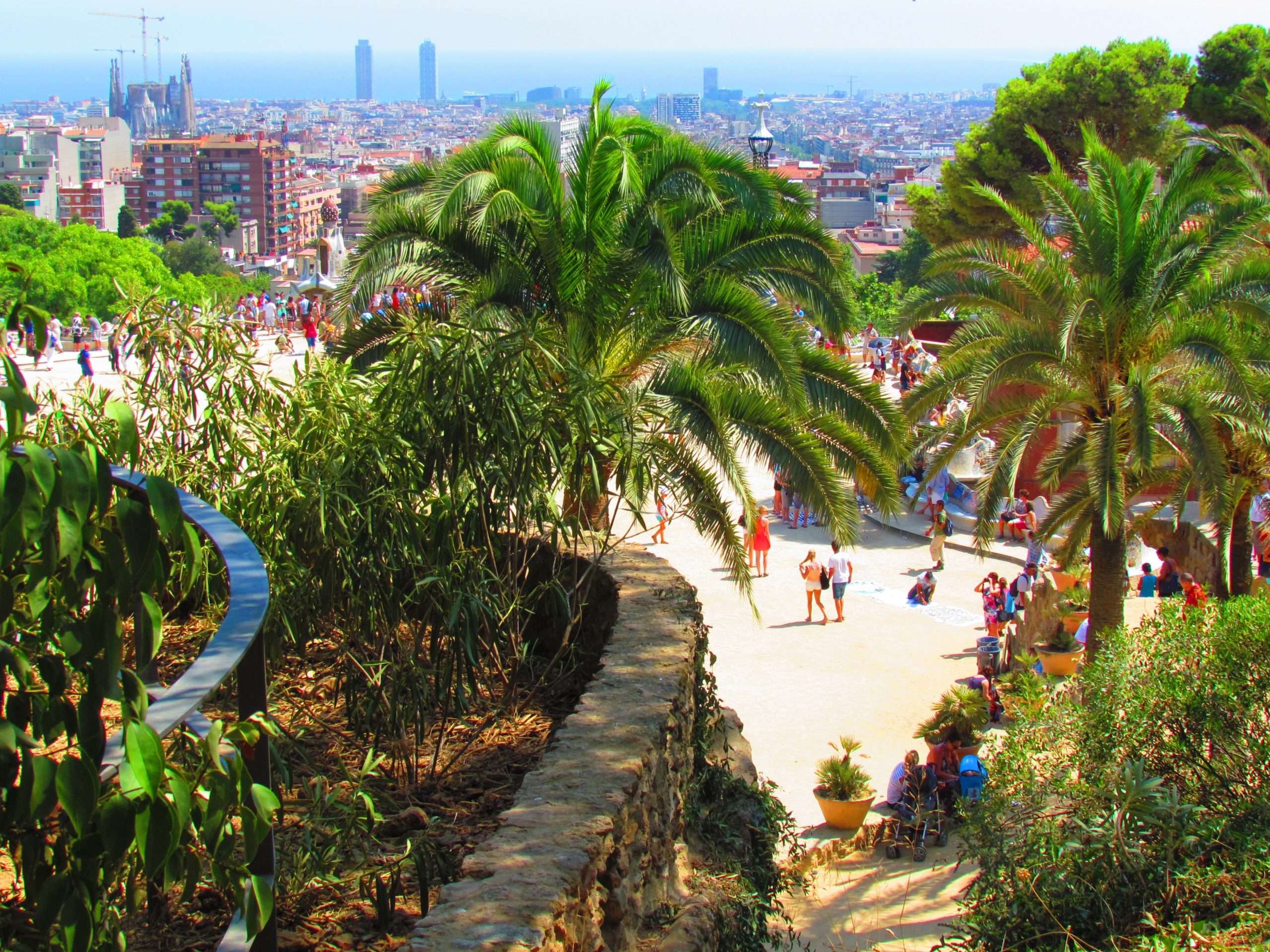
There is something visitors rarely realise. Park Guell is not simply an attraction. It is still part of a living neighbourhood. People live around it. Children grow up beside it. Residents walk through it.
Barcelona reserves specific early-morning and evening periods for residents and holders of the local Passi Verd, when tourist visits are not permitted. Experiencing Park Guell like a local does not mean sneaking into a residents-only time slot. It means understanding something subtler: this masterpiece is also someone’s neighbourhood.
Tickets and practical advice
Before you go
Park Guell is one of Barcelona’s busiest attractions, and the monumental zone uses timed entry. Buy tickets online in advance when possible, especially in high season or if this is one of your must-see places.
- Check your time slot before planning the rest of the day.
- Wear comfortable shoes: the hills are real.
- Once admitted, visitors can usually stay as long as they wish during opening hours.
- Leaving the park normally ends the visit, so do not expect same-ticket re-entry.
Park Guell guide
What to do after Park Guell
Do not let the park be the end of the walk. Let it be the beginning. Instead of immediately returning to the centre, continue exploring the surrounding hills and neighbourhoods. Walk toward Gracia and watch monumental Barcelona slowly dissolve into everyday Barcelona.
Tour buses disappear. Balconies replace monuments. Small bakeries, neighbourhood bars and shaded plazas take over. One minute you are standing inside a UNESCO-listed work of architecture. Not long afterwards, someone is drinking coffee beneath a balcony full of laundry.
One last secret
Perhaps Park Guell’s greatest secret is not hidden at all. It is simply overlooked. Visitors arrive searching for Gaudi’s buildings. But Gaudi was looking at something else: the hill.
Some failures become gardens. Some fragments become mosaics. And some hills above Barcelona become places where, more than a century later, the whole world still comes to dream.
Park Guell FAQ
Do you need tickets for Park Guell?
Yes, visitors need timed tickets for the monumental zone. It is best to book ahead, especially in high season, weekends and school holidays.
What is the best route through Park Guell?
Start from the upper areas when possible, enjoy the viewpoints and stone viaducts first, then descend toward the dragon, Hypostyle Room and terrace.
How long do you need at Park Guell?
Most visitors should allow around 2 hours. Add more time if you like slow photography, viewpoints, quieter paths or walking onward toward Gracia.
Is Park Guell worth visiting?
Yes, especially if you enjoy Gaudi, city views and architecture that feels completely different from the rest of Barcelona. It is busiest around the dragon, but the wider park is more varied than many visitors expect.