Casa Batllo Barcelona guide
House of bones, dragons and light
Casa Batllo is not just another Gaudi facade on Passeig de Gracia. It is a house that behaves like a story: bones at street level, an ocean of blue light inside, and a dragon sleeping on the roof.
First rule
Do not go inside yet
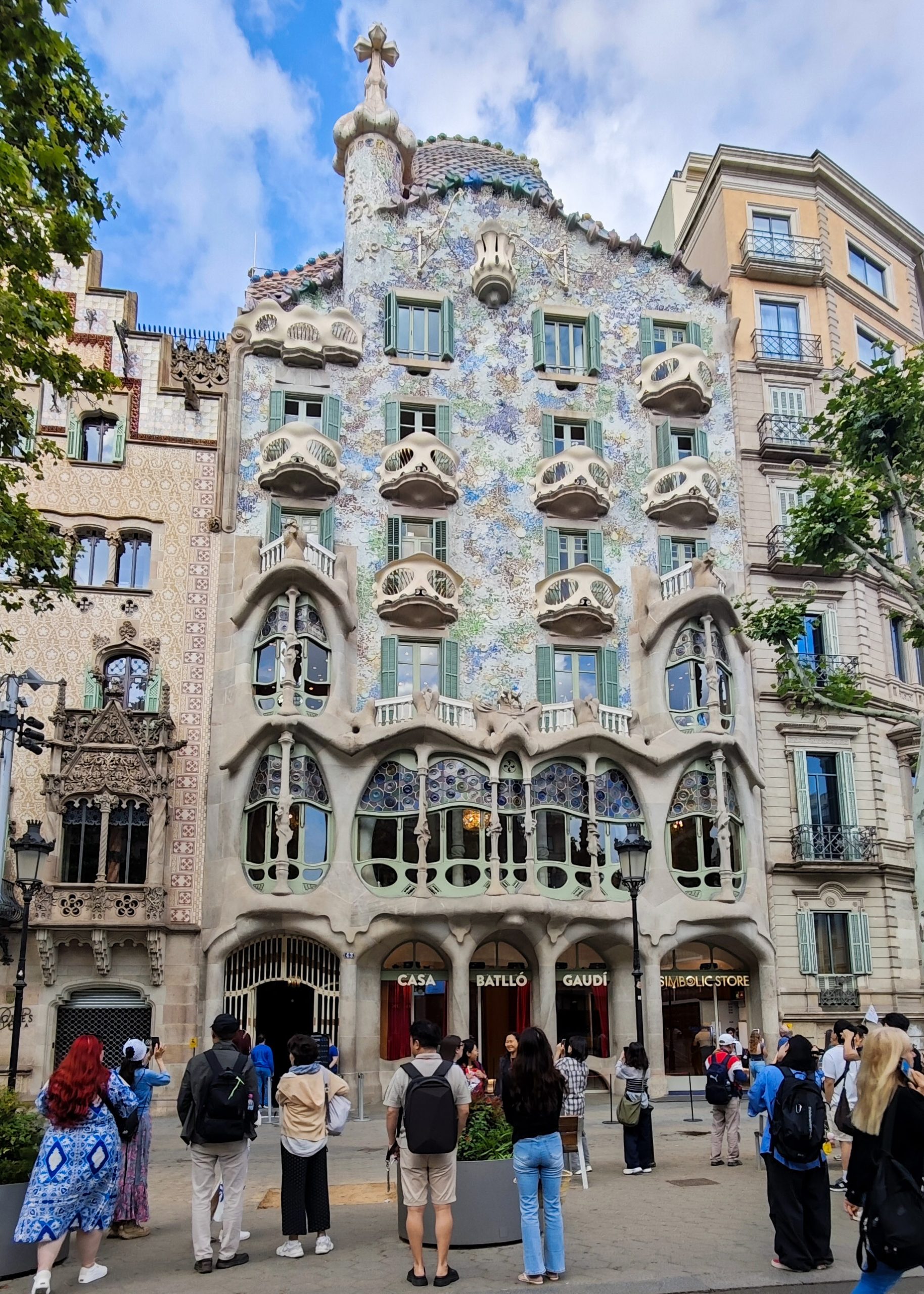
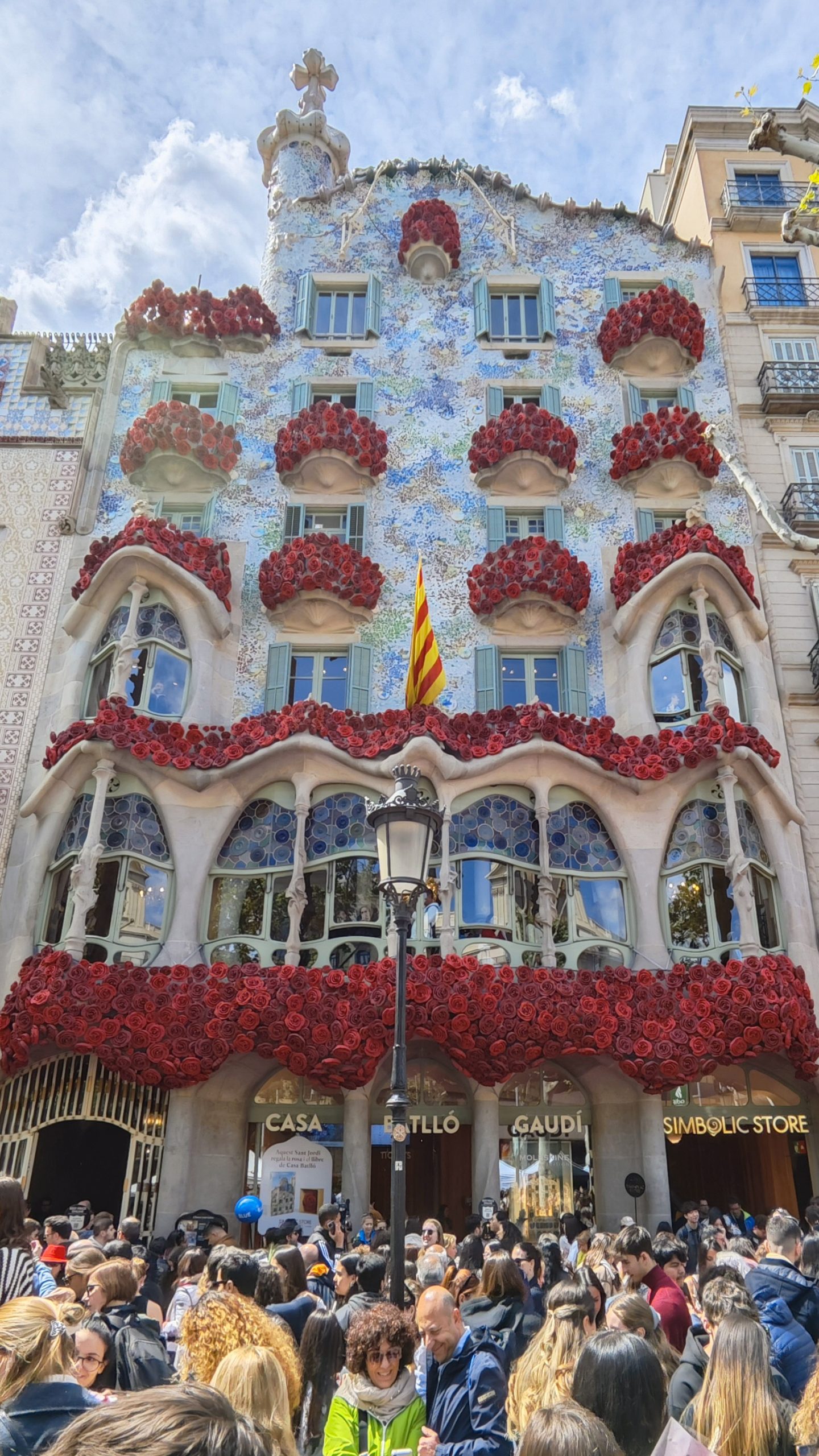
Before you cross the threshold, stop on the opposite side of Passeig de Gracia and look at the whole building. Most visitors take a quick photo and rush inside. Casa Batllo asks for a slower beginning.
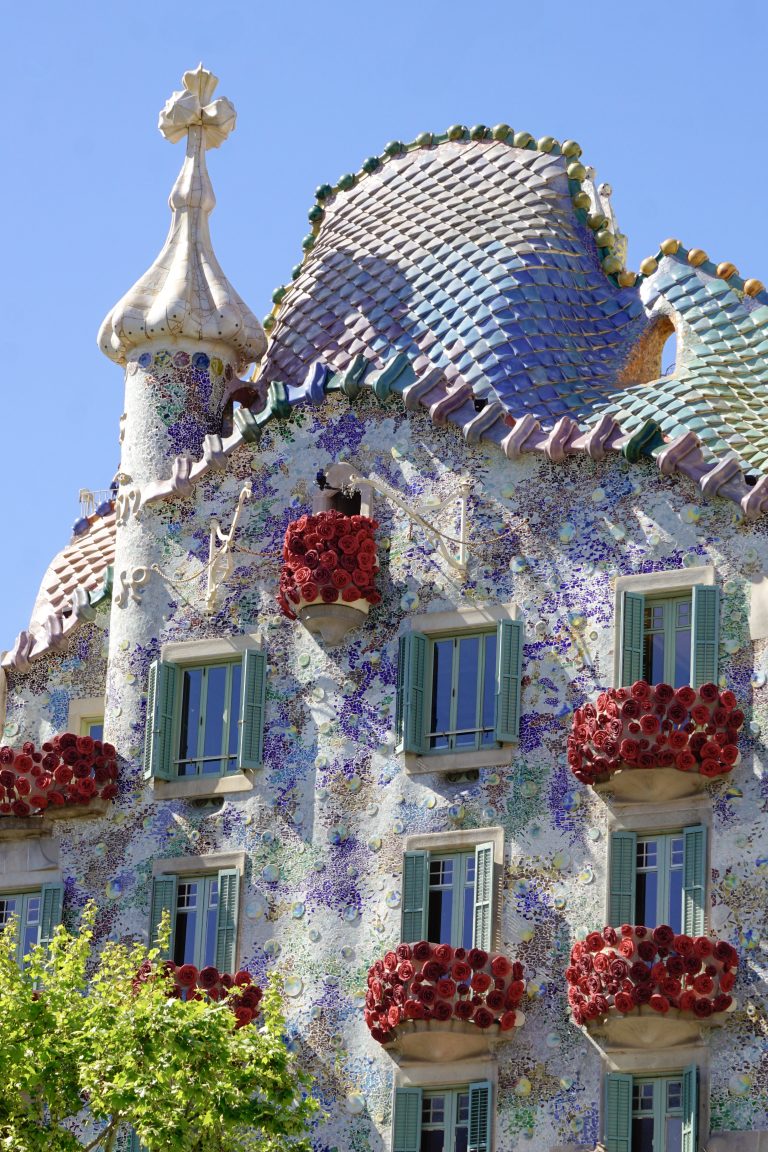
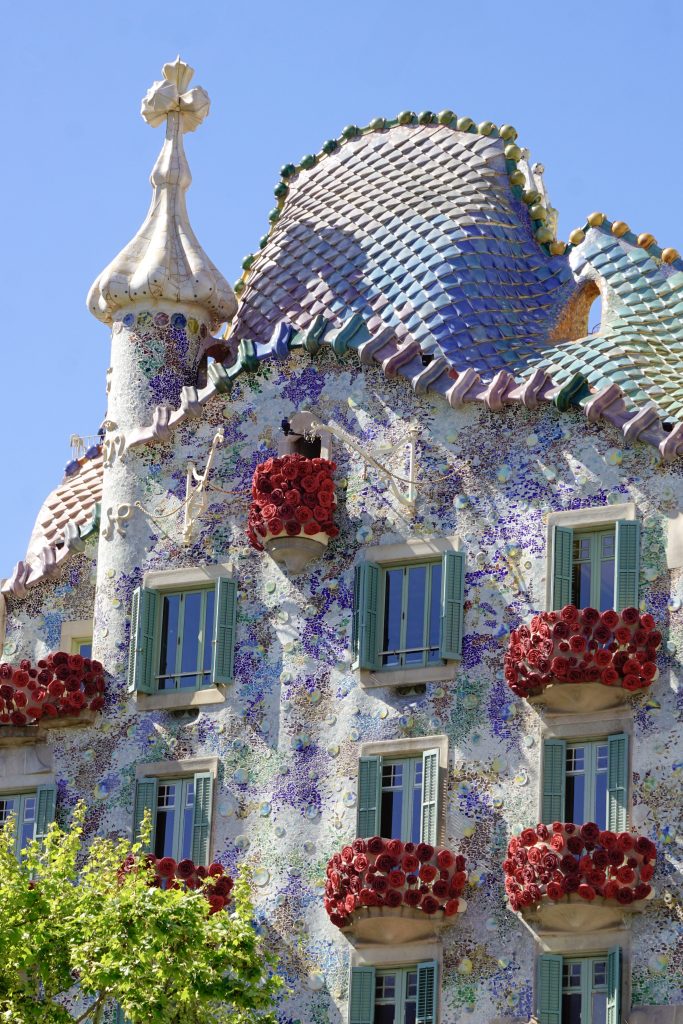
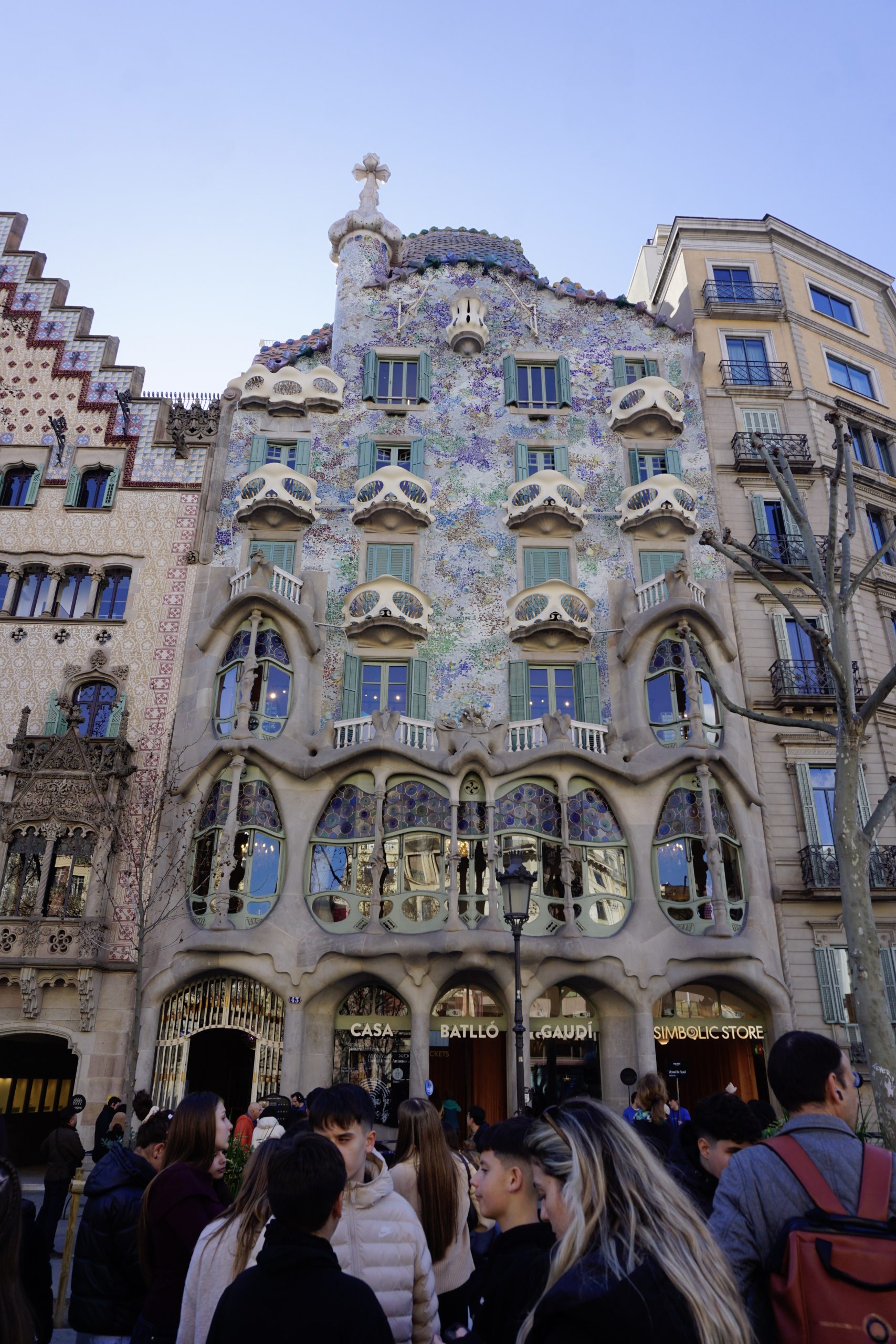
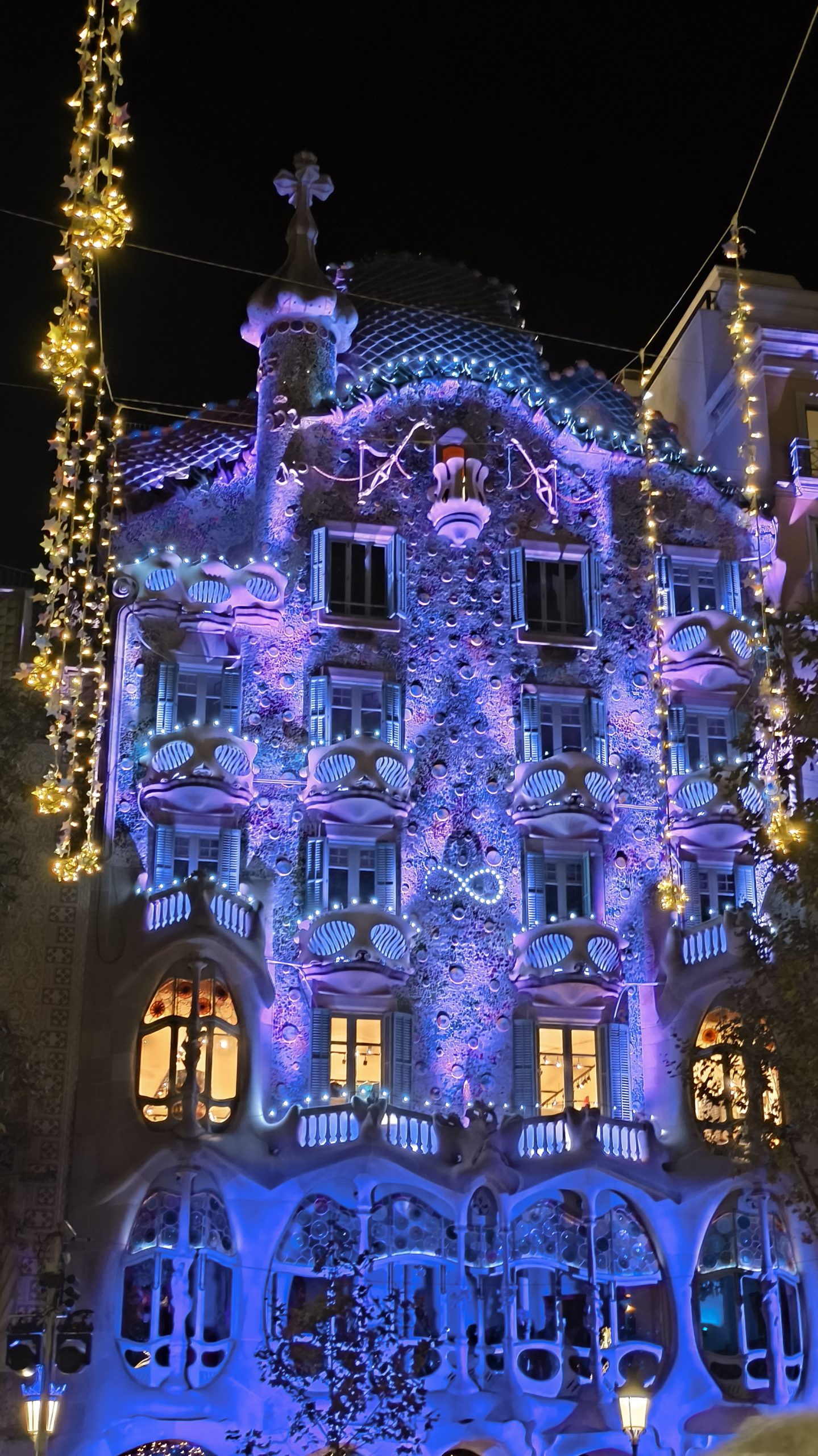
The facade seems to ripple like water. The balconies look like masks, skulls or bones depending on where you stand. The roof rises like the back of a dragon. Nothing feels still, and that is the point.
Gaudi transformation
An ordinary house became an architectural argument
Gaudi did not begin with an empty site. He inherited an existing house and transformed it between 1904 and 1906 for Josep Batllo, turning an ordinary building into one of Barcelona’s most expressive Modernisme landmarks.
The result is a house that refuses straight answers. Is it a sea cave, a skeleton, a dragon, a festival mask, or a private home turned into theatre? Casa Batllo works because it can be all of these at once.
Casa Batllo is best understood as a story you enter slowly.
Street-level details
The house of bones
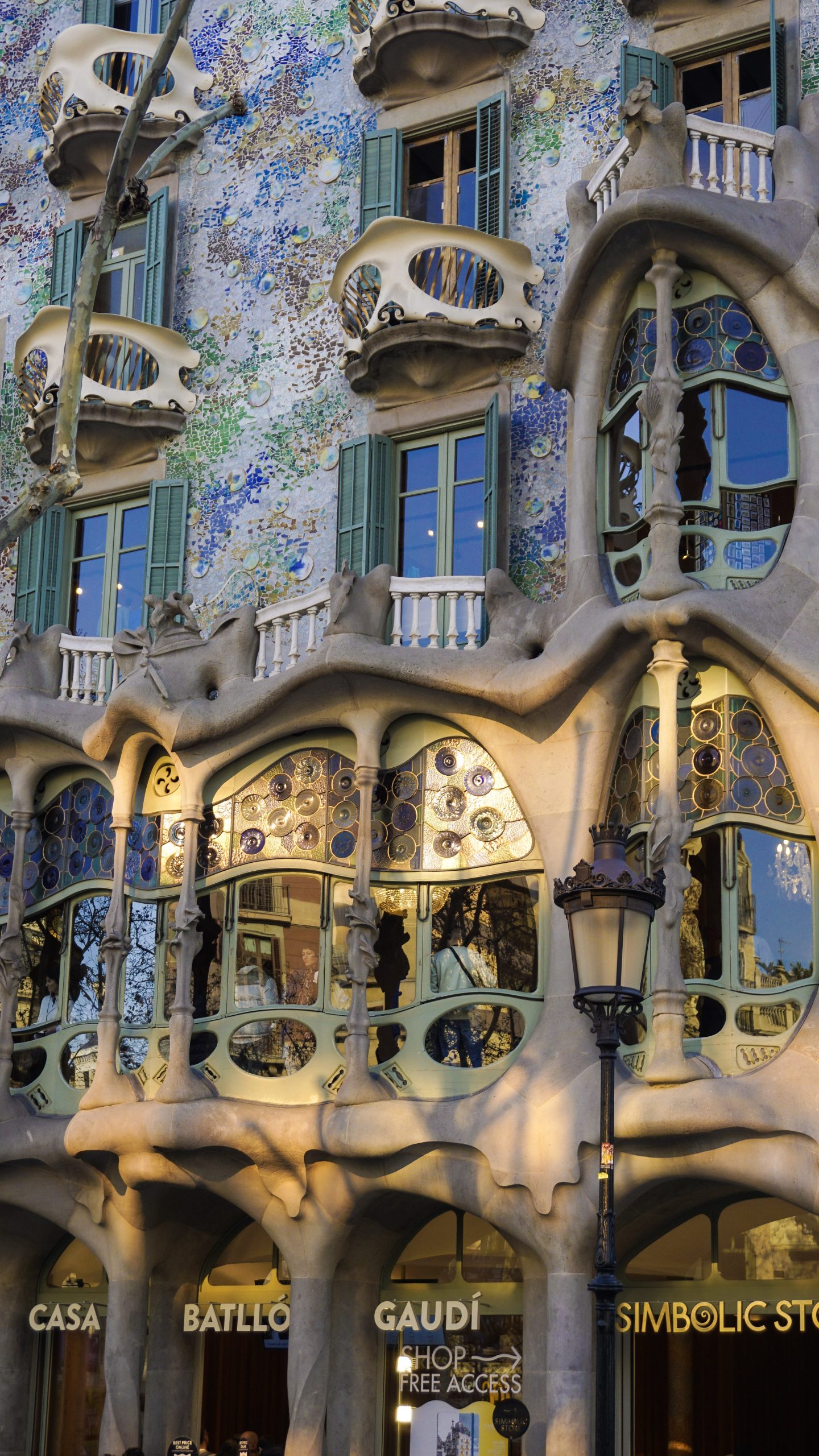
The lower facade is where the nickname begins. The stone columns stretch and bend like bones. The balconies hover like masks. The windows curve instead of obeying straight lines.
Look for how Gaudi makes structure feel alive. The building does not simply decorate itself with nature. It seems to have grown from it.
Sant Jordi
The dragon above Passeig de Gracia
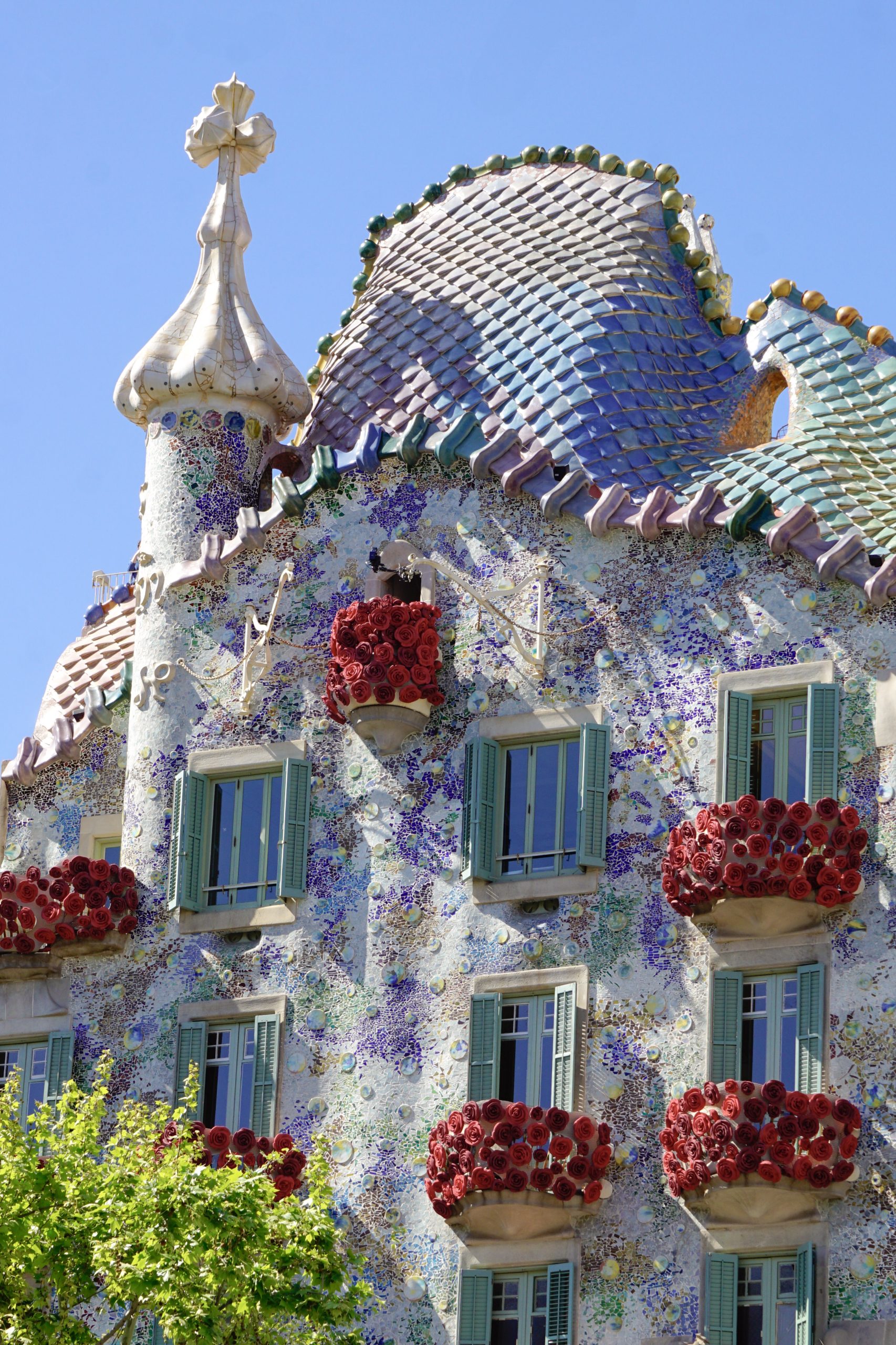
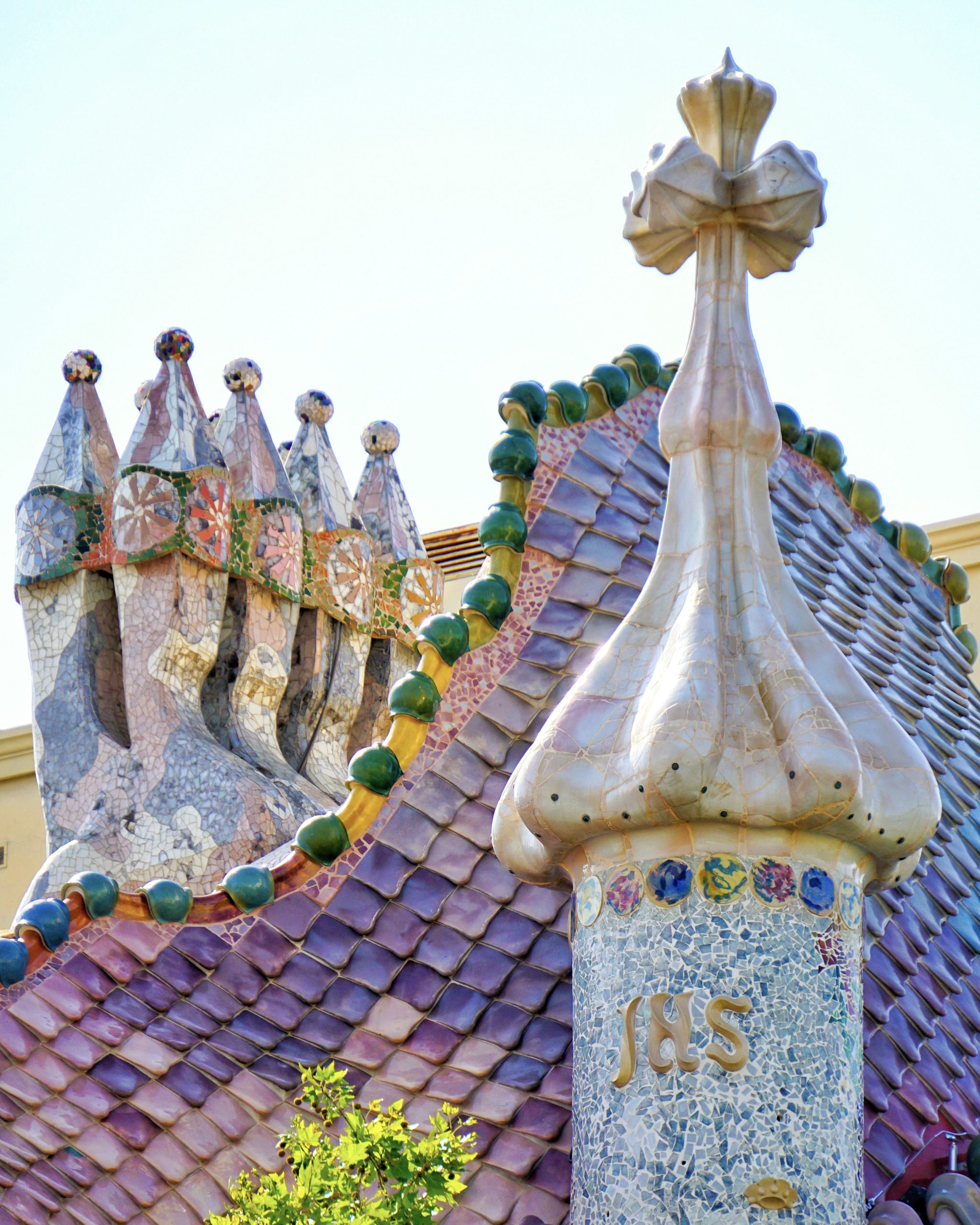
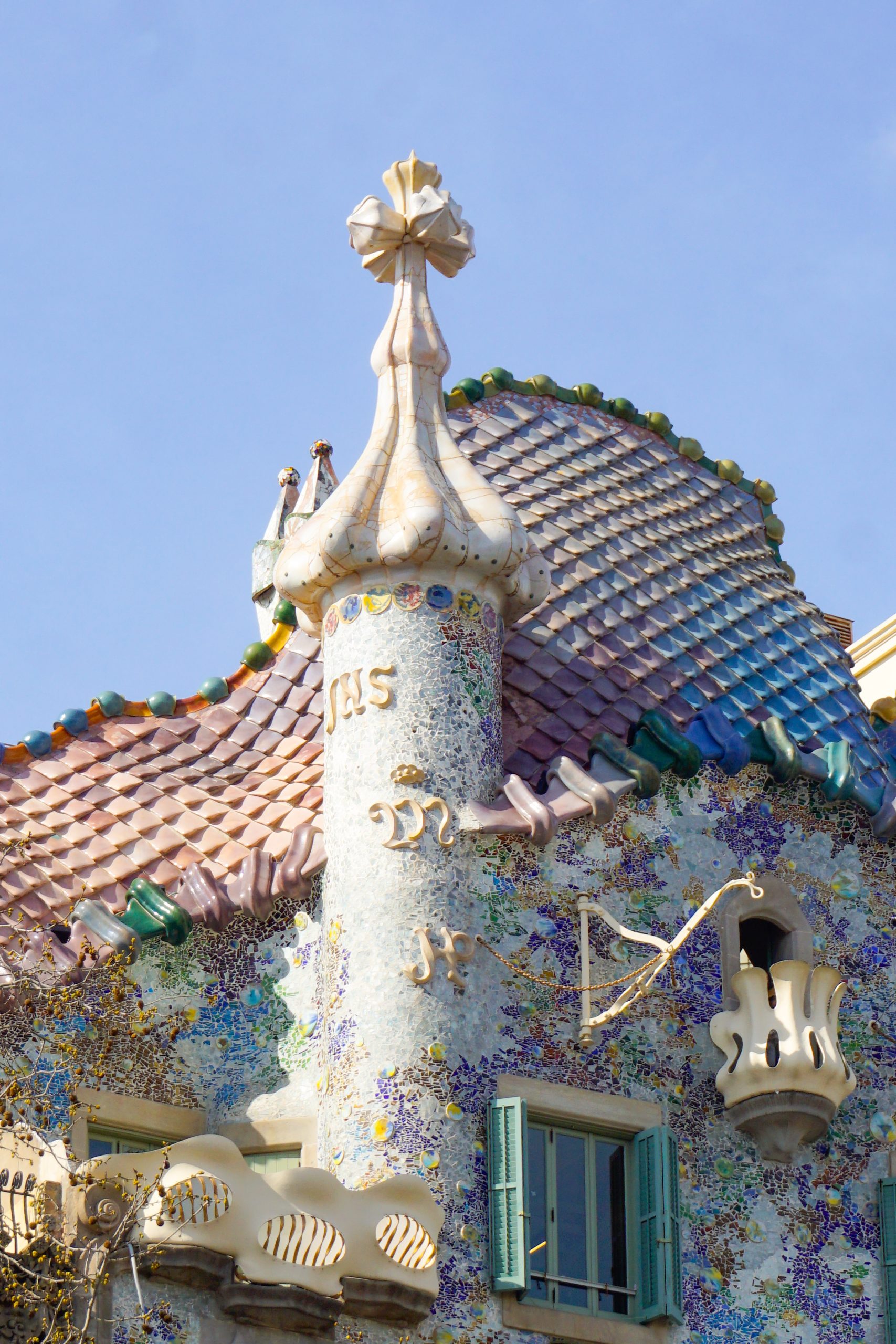
Look up to the roof and the story changes. The ceramic tiles resemble scales, shifting from blues to purples and greens. Many visitors read the roof as the back of the dragon from the Sant Jordi legend, with the cross-topped turret rising like the saint’s sword.
Gaudi rarely reduces his buildings to one simple symbol. Still, this is part of the magic: Casa Batllo lets Barcelona’s legends hover just above the everyday street.
Inside the house
Now enter the ocean
Inside, the mood changes from street theatre to underwater movement. Doors, windows, handles and ceilings curve as if shaped by current rather than tools.
Nothing feels flat for long. Gaudi uses light, air, wood, glass and ceramic to make the practical parts of a house feel emotional. That is why Casa Batllo is more than a photo stop: the building teaches you how to notice.
Design secret
The blue well solves a problem beautifully
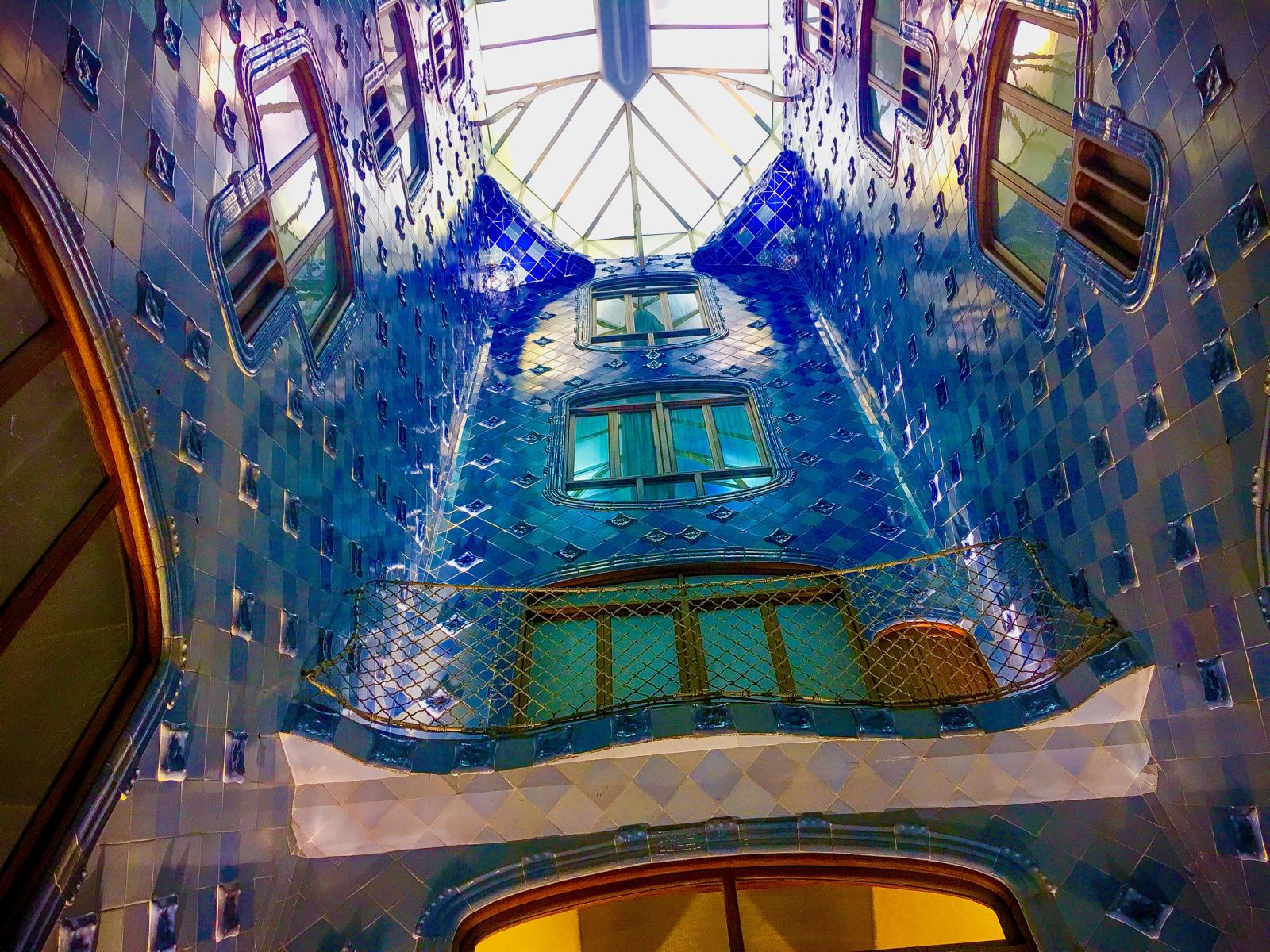
The central light well is one of the clearest examples of Gaudi’s intelligence. The tiles are darker near the top, where the sun is strongest, and lighter lower down, where rooms need more brightness.
It looks poetic, but it is also practical. Casa Batllo is full of these moments: beauty doing useful work.
Quiet moment
The attic turns colour into silence
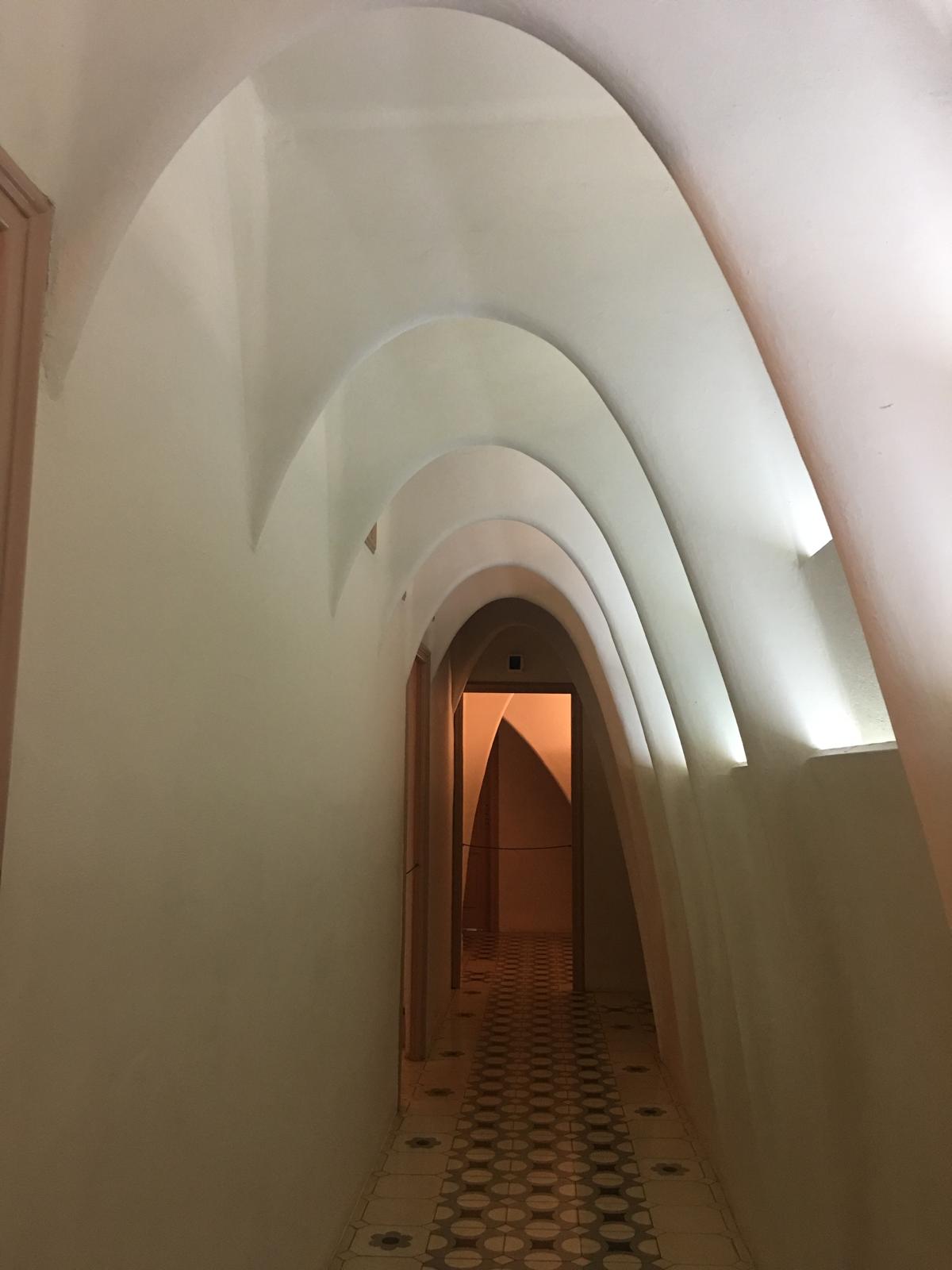
After the saturated blues and theatrical rooms, the attic feels almost calm. White arches repeat in a soft rhythm, often compared to ribs or a spine.
This is a useful pause in the visit. The house stops performing loudly and lets structure become the decoration.
Final climb
Then climb onto the dragon
The roof is the story’s final scene. Chimneys become sculptural figures. Tiles become scales. The city opens around you, but Casa Batllo keeps pulling your eye back to its own details.
If you can, visit when the light is softer. Morning, late afternoon or evening gives the ceramic surfaces more depth than harsh midday sun.
After Casa Batllo
Look beyond one famous house
Casa Batllo is part of a wider Modernisme walk. Before or after your visit, look at the neighbouring buildings on the Illa de la Discordia, then continue along Passeig de Gracia toward La Pedrera.
For a calmer finish, step away from the busiest part of the avenue and let Eixample become a neighbourhood again: corners, balconies, small cafes and repeated city blocks.
Practical questions
Casa Batllo FAQ
Is Casa Batllo worth going inside?
Yes, if you want one highly theatrical Gaudi interior. If time or budget is tight, the exterior still gives you a powerful free experience.
How long do you need at Casa Batllo?
Plan around 1.5-2 hours for the interior. Add extra time outside for photos and for seeing nearby Modernisme buildings.
When is the best time to visit Casa Batllo?
Morning and late afternoon usually feel better for light and pacing. Busy holidays, weekends and Sant Jordi can be more crowded.
Is Casa Batllo good with children?
Yes, especially if you frame it as a dragon, bones and ocean treasure hunt. Keep the visit playful and do not overpack the same day.