Arc de Triomf Barcelona guide
The gateway to a Barcelona that wanted to meet the world
Look beyond the red bricks. Barcelona’s Arc de Triomf was never built to celebrate a military victory. It was built to welcome strangers, and more than a century later, that invitation still stands.
Why it matters
A monument that welcomes, not conquers
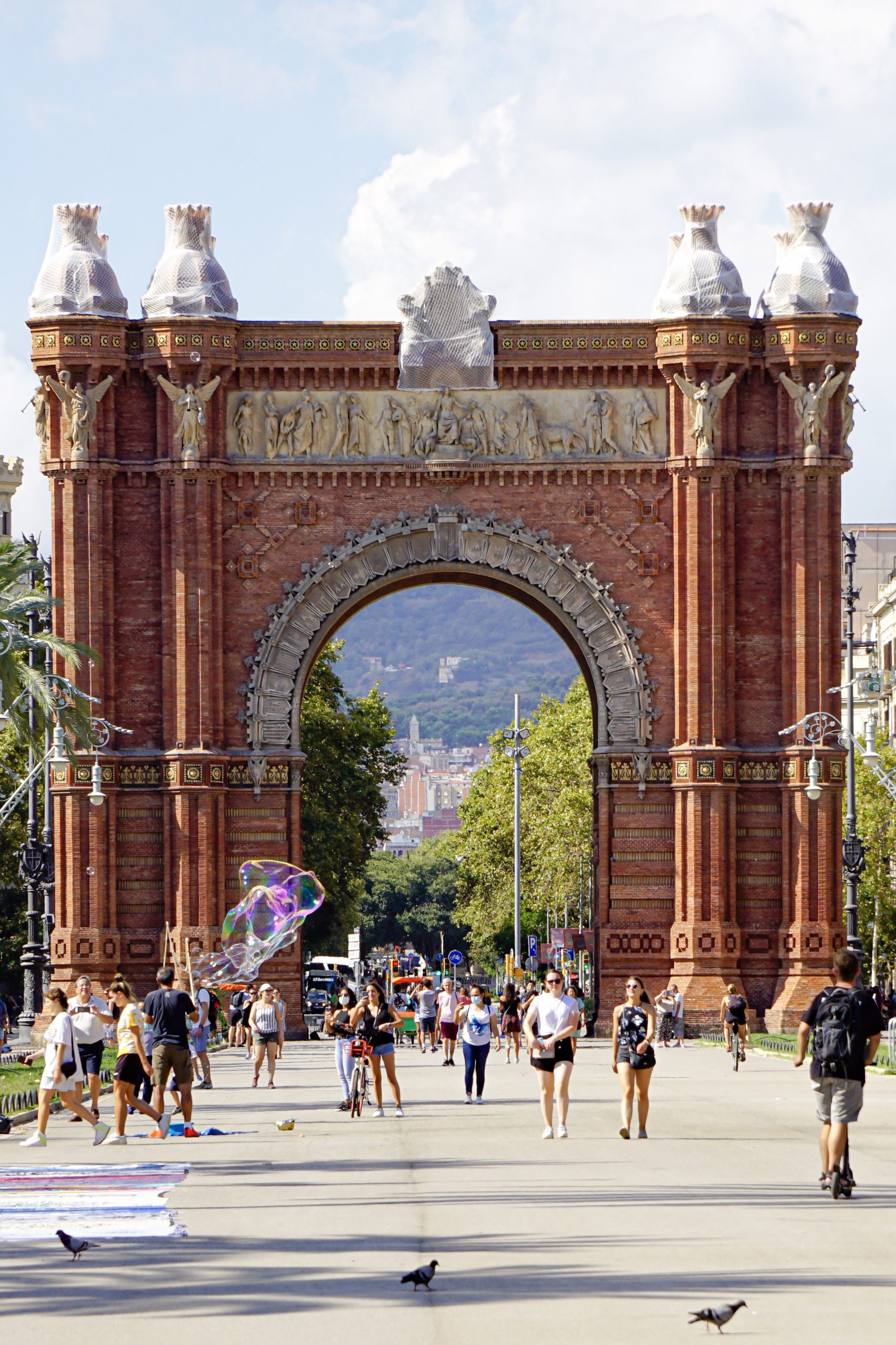
Some monuments demand silence. Barcelona’s Arc de Triomf does the opposite.
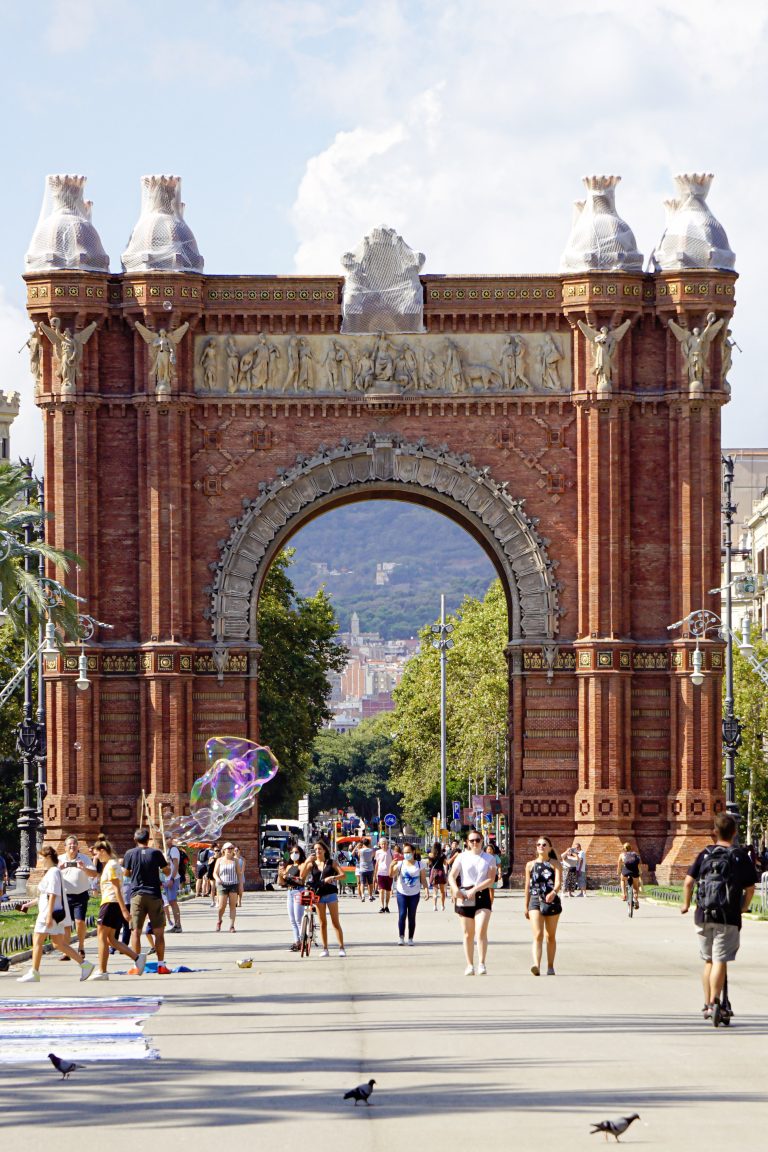
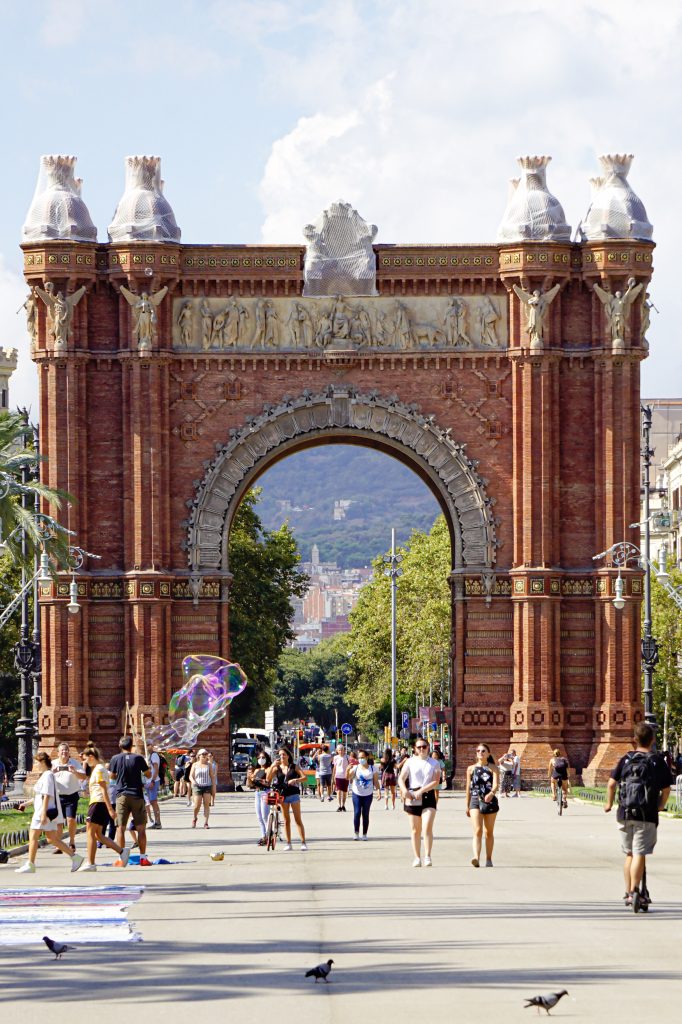
Come here on an ordinary afternoon and life seems to swirl around it: bicycles glide beneath the palms, children chase pigeons, runners weave through the promenade, musicians find their rhythm beneath the trees, and skaters turn smooth pavement into an improvised stage.
Above them all stands an enormous red-brick gateway. No palace behind it. No army marching through it. No king waiting on the other side. And that is the first secret of Barcelona’s Arc de Triomf: it celebrates no triumph at all.
1888 Universal Exhibition
A triumphal arch without a war
Triumphal arches usually tell stories of conquest. Rome built them for emperors. Paris raised one to military glory. Barcelona chose another story.
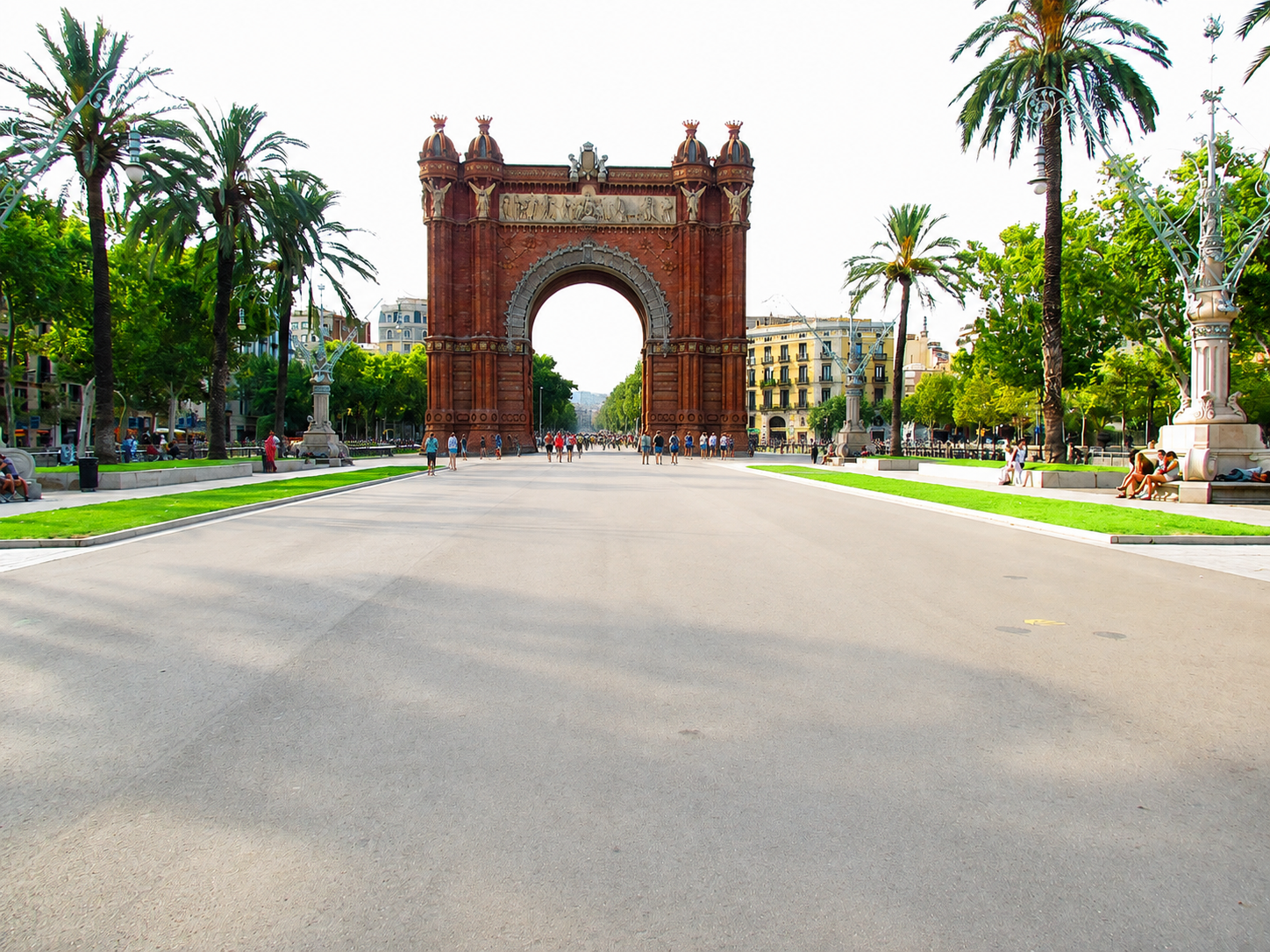
The Arc de Triomf was designed by Catalan architect Josep Vilaseca i Casanovas as the monumental entrance to the 1888 Universal Exhibition, whose grounds extended into what is now Parc de la Ciutadella.
This was not a door built for soldiers returning home. It was a door opened to strangers arriving from abroad. Barcelona was introducing itself to the world.
The fair vanished. Its fingerprints did not.
Architecture
Why is it red?
Barcelona could have built something pale, classical and solemn. Instead, Vilaseca chose exposed red brick.
The structure follows classical triumphal proportions, but its brickwork and decorative vocabulary introduce a distinctive Neo-Mudejar influence, setting it apart from the stone triumphal arches found elsewhere in Europe.
Come when the sun is lower and you will understand why the material matters. Red turns amber. Shadows sharpen the carvings. The monument seems warmer than stone should be.
Look closer
Do not just photograph it. Read it.
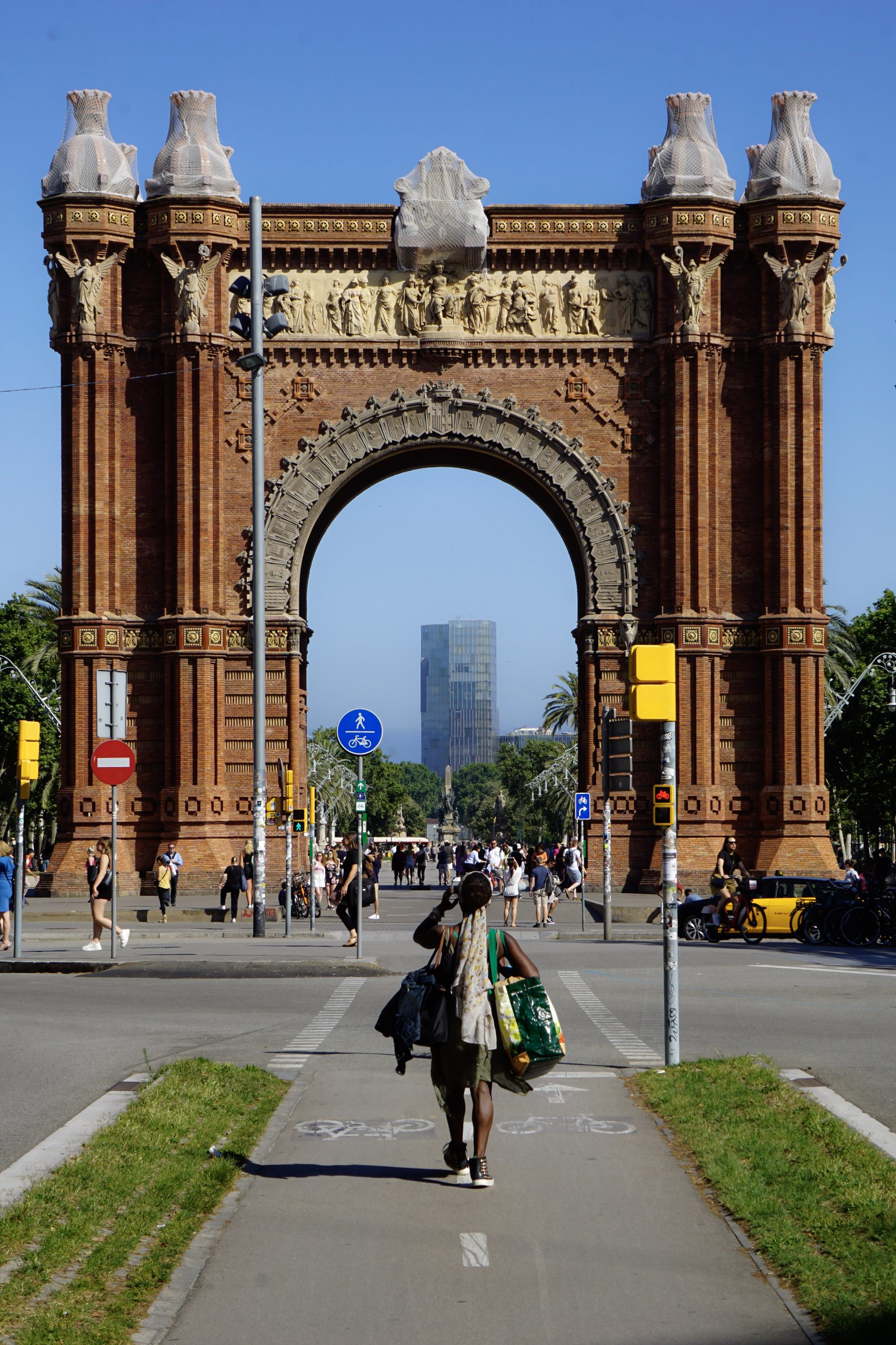
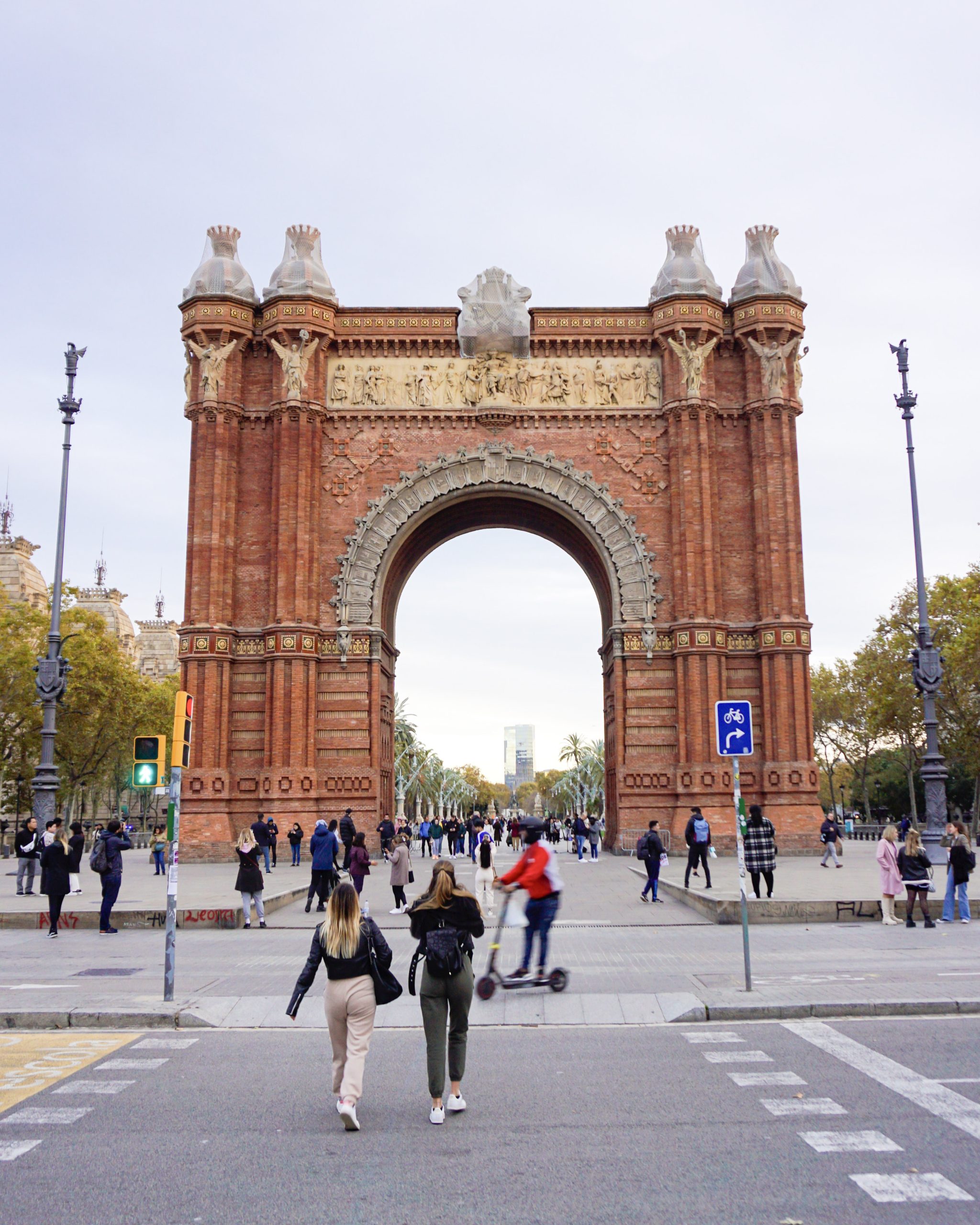
Most people arrive, step backwards, raise their phones and photograph the entire Arc. Do the opposite. Walk closer.
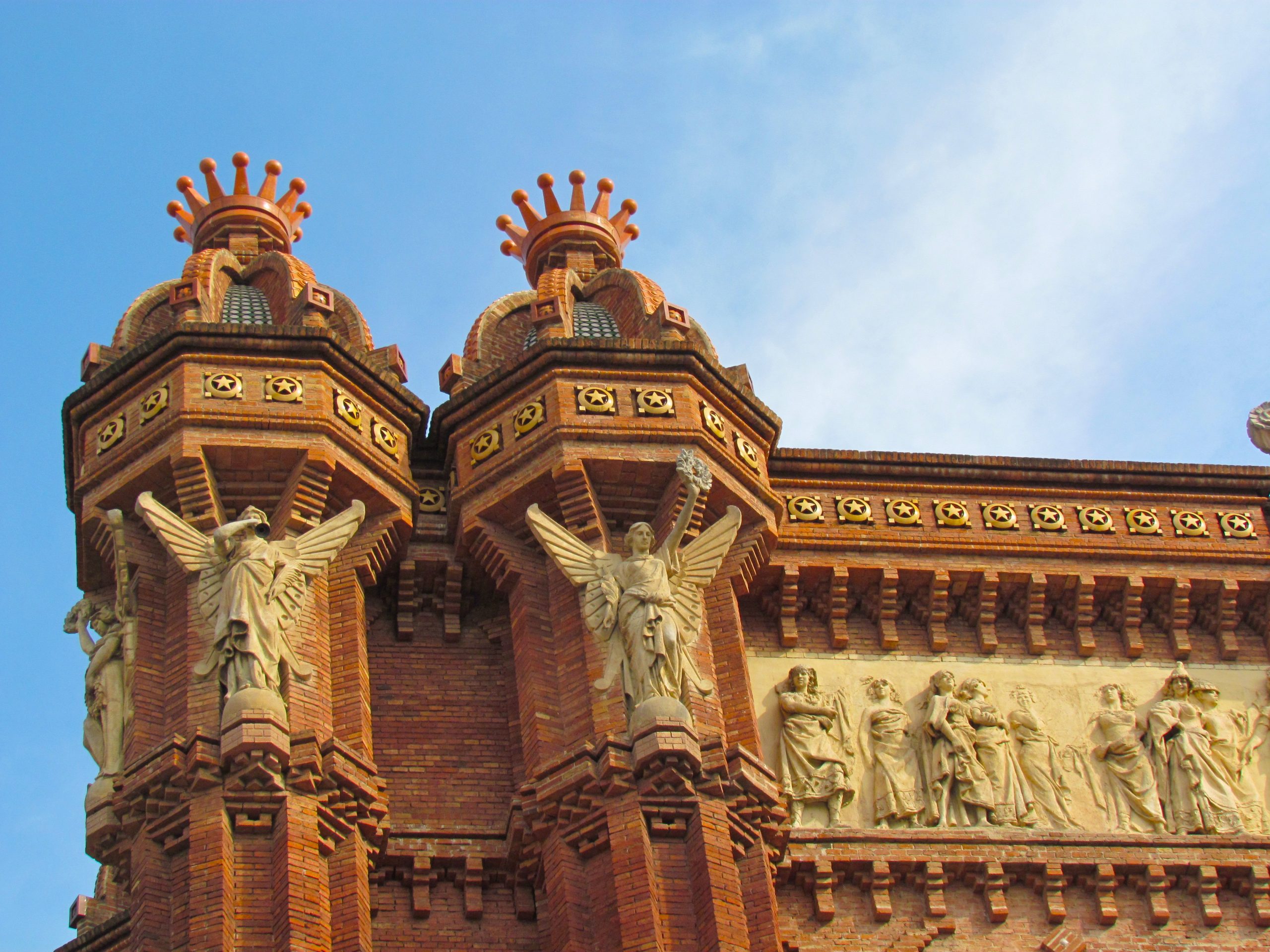
High above the passageway are sculptural friezes telling the story of the Universal Exhibition. On the side facing Passeig de Sant Joan, Barcelona appears personified as a woman receiving international visitors. On the opposite side, an early work by Josep Llimona depicts the distribution of rewards to exhibition participants.
The Arc is therefore not simply an entrance. It is a nineteenth-century message written in sculpture: come in, create, trade, learn, meet.
Hidden detail
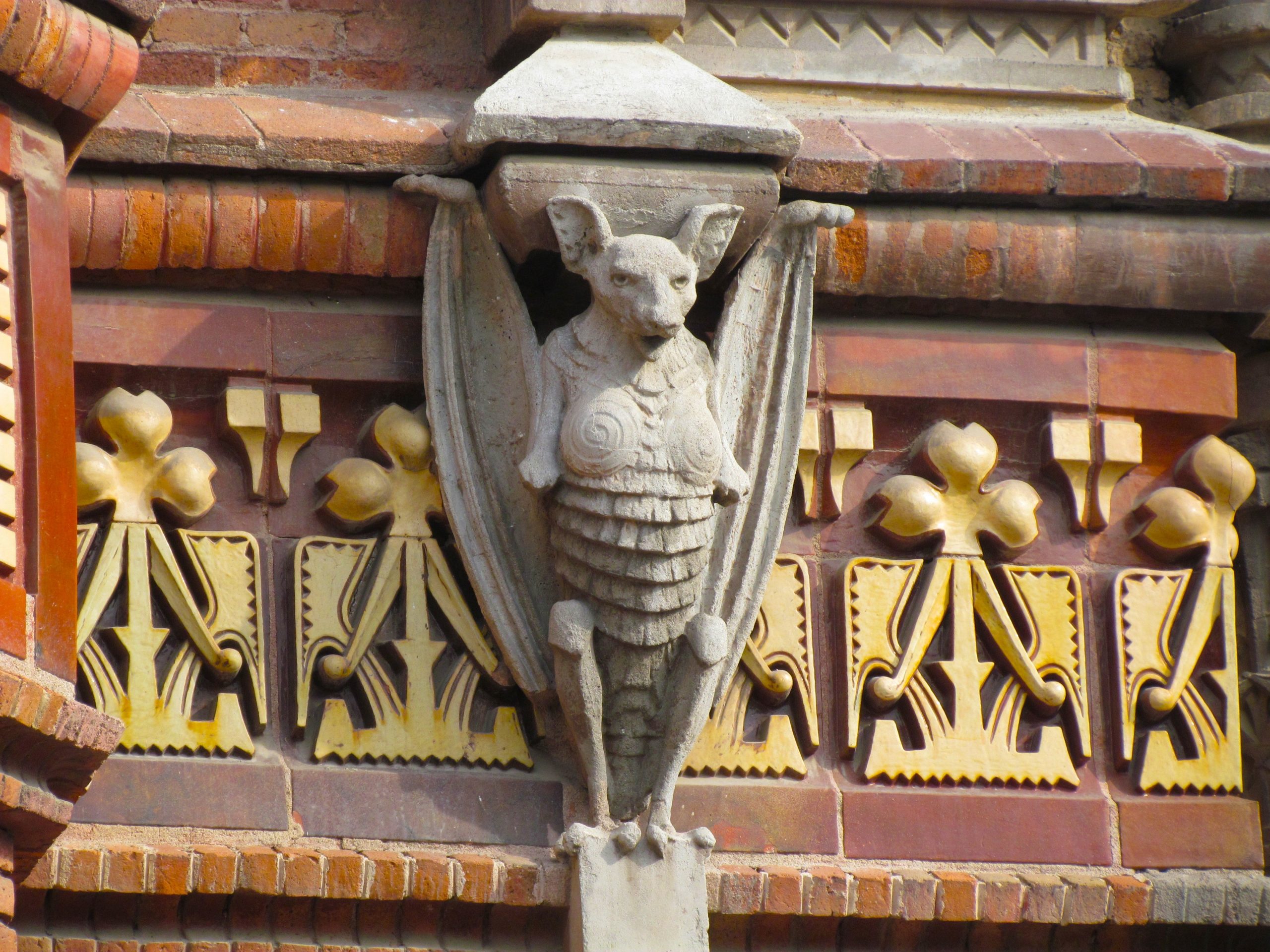
Now find the bats
Here is a challenge for curious travellers. Stand near the Arc. Forget the whole monument. And hunt for a bat.
Look carefully around the architectural decoration and you can find stone bats incorporated into the monument. They are associated with Jaume I the Conqueror, the medieval king whose reign became linked with Barcelona’s expansion and prosperity.
Thousands of people pass beneath them without noticing. Once you find one, however, the Arc becomes a treasure hunt.
Local rhythm
The local secret is the boulevard
Tourists photograph the monument. Locals use the space around it. That difference matters.
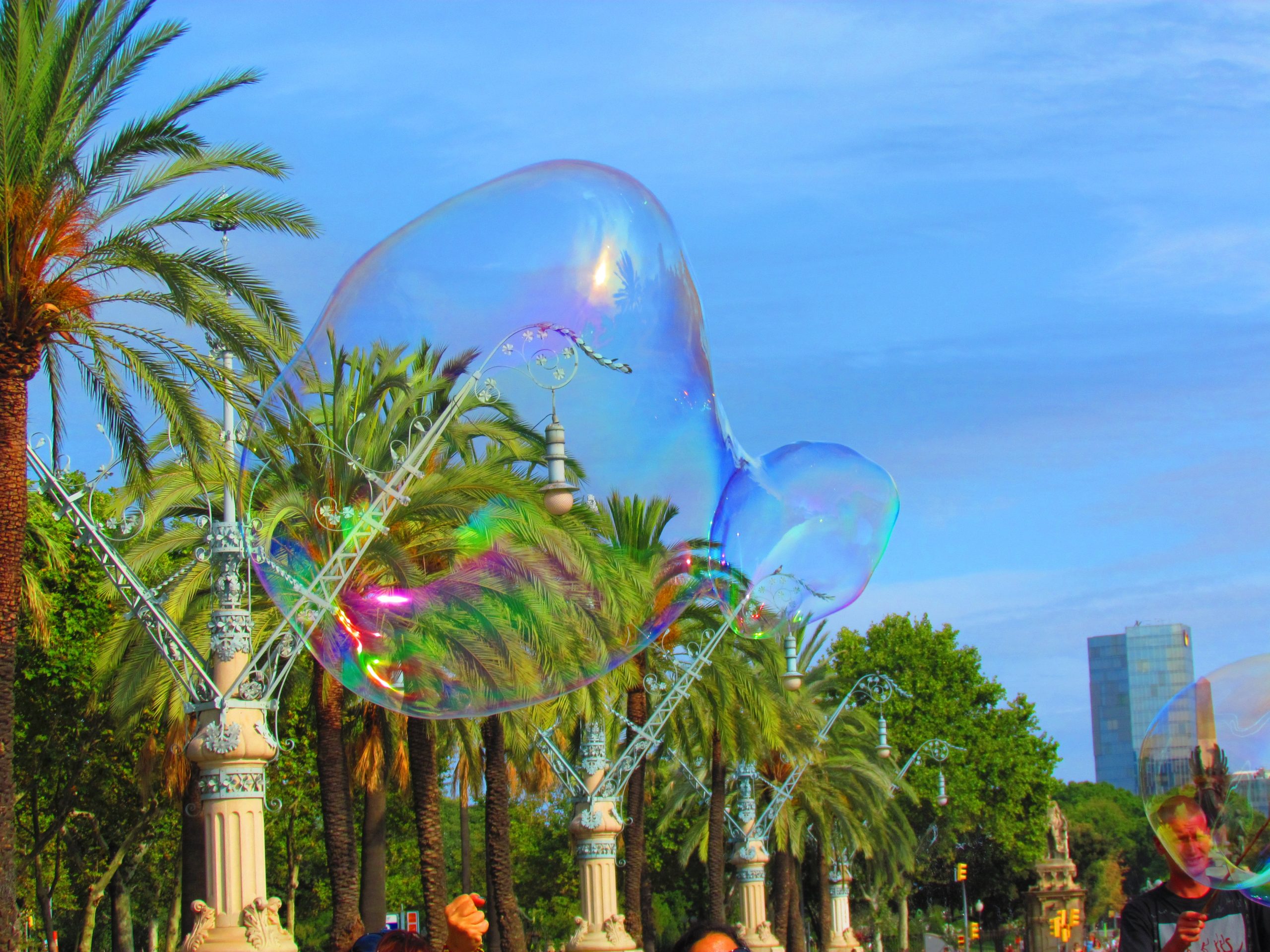
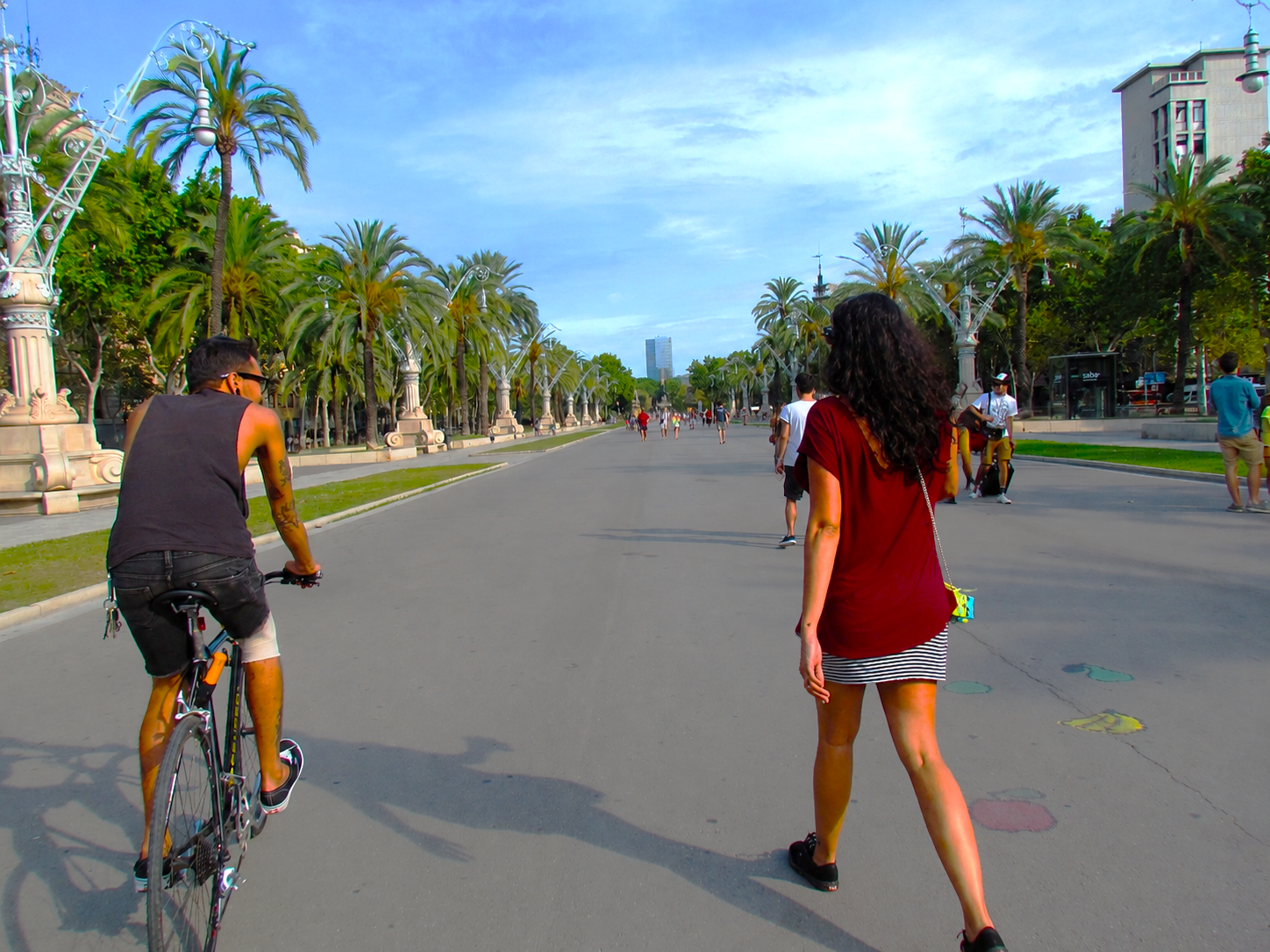
The broad pedestrian avenue stretching from Arc de Triomf toward Ciutadella, Passeig de Lluis Companys, is one of those Barcelona spaces where monumental architecture somehow becomes everyday scenery. The promenade is roughly 50 metres wide, and its distinctive iron balustrades were designed by architect Pere Falques.
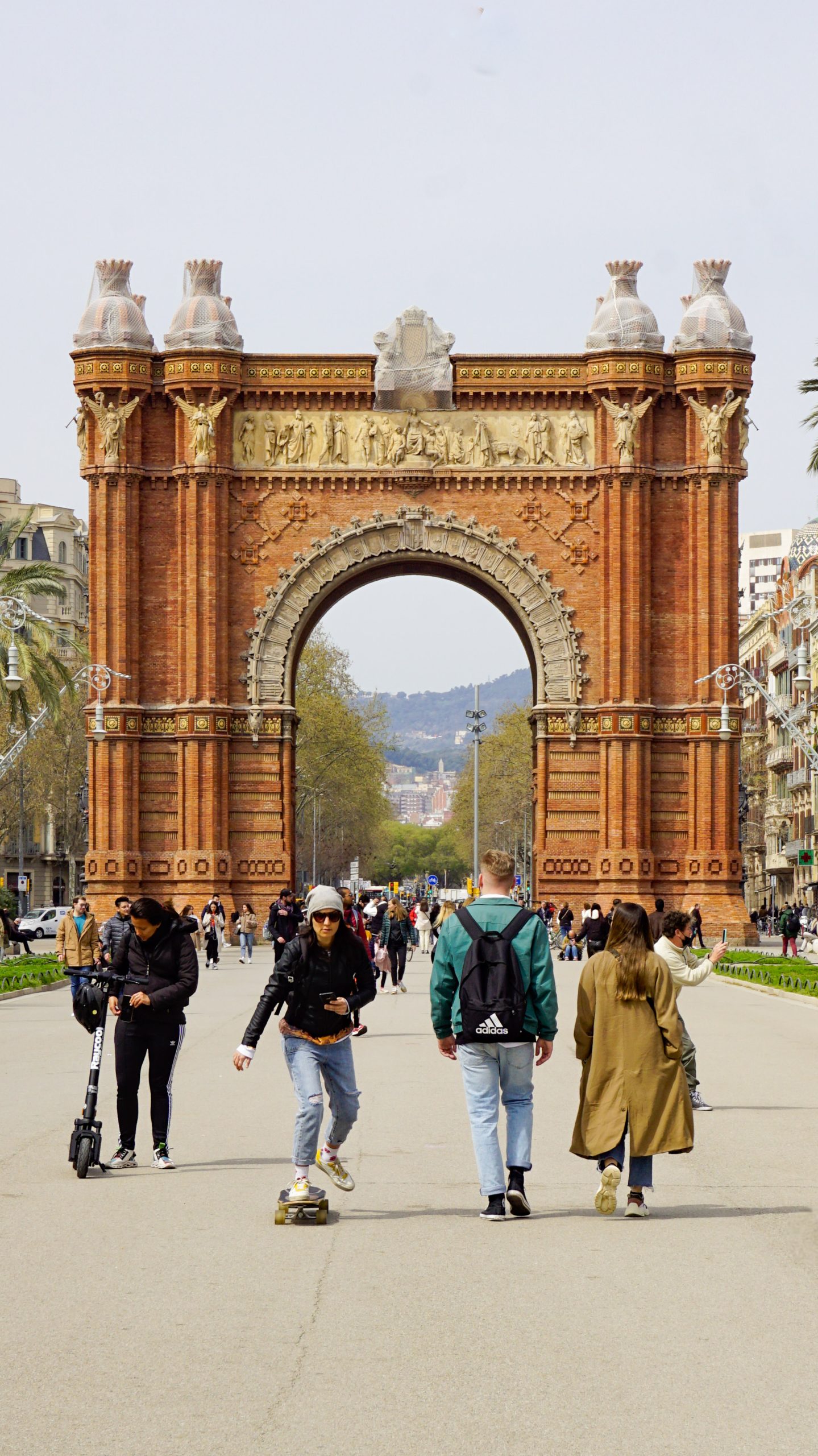
Walk it. This is where Barcelona loosens its collar: skaters, guitar players, friends on the ground, dogs pulling toward Ciutadella, and children discovering that chasing pigeons is apparently the greatest sport ever invented.
Best walk
The secret route: walk through 1888
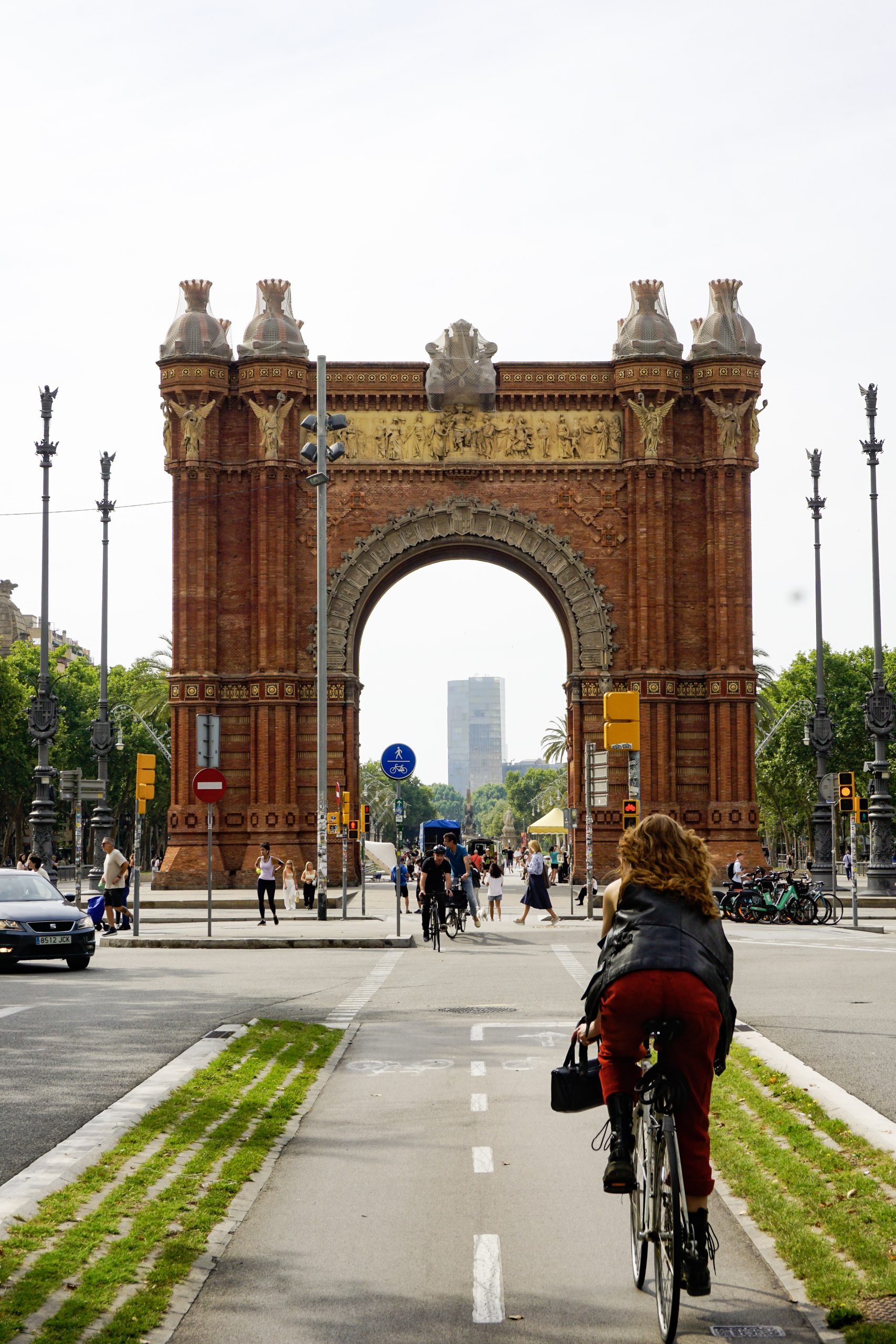
Start north of the Arc, around Passeig de Sant Joan. Approach slowly. Let the monument grow larger instead of appearing suddenly from the Metro. Then walk beneath it.
That matters. You are following roughly the symbolic direction taken by visitors heading toward the 1888 exhibition. Continue along Passeig de Lluis Companys toward Parc de la Ciutadella.
In only a few minutes, red brick gives way to palms, ironwork, gardens and monumental nineteenth-century Barcelona. You are not simply walking toward a park. You are following the ghost of a World Fair.
After the arch
Then keep walking into everyday Barcelona
Once inside Parc de la Ciutadella, resist the temptation to immediately consult your map. Wander. The park contains echoes of the enormous transformation surrounding the 1888 Exhibition, and exploring it after understanding the Arc gives the landscape another dimension.
There is another route too. Instead of heading directly into Ciutadella, explore the streets branching away from the Arc toward Sant Pere, Santa Caterina and El Born. Monumental Barcelona begins dissolving into intimate Barcelona.
Best light
Come back at golden hour
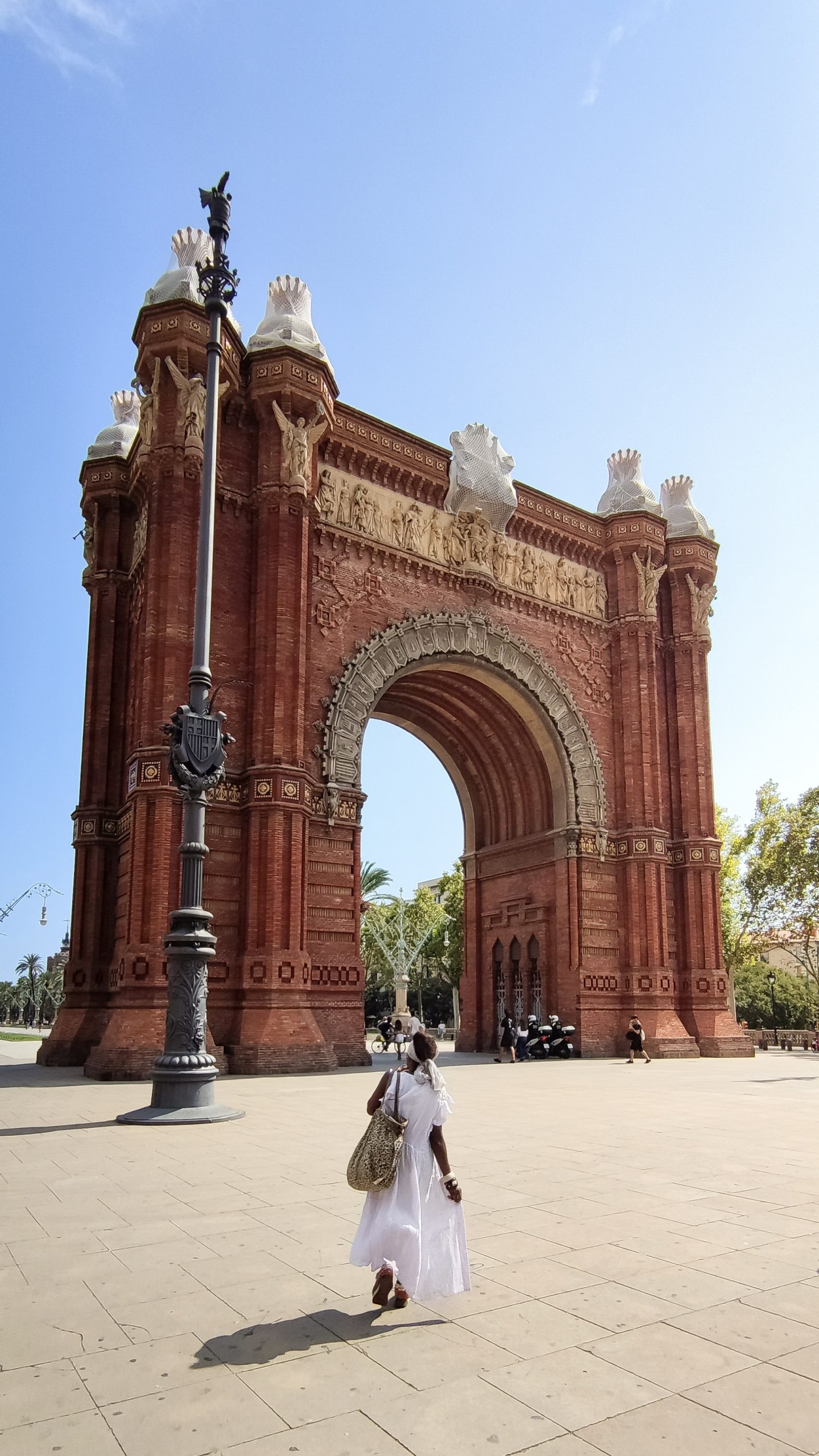
If you have time, return later. Arc de Triomf changes with the light. Morning belongs to runners and commuters. Afternoon belongs to movement. But golden hour belongs to the brick.
As the sun lowers, the red facade deepens, the palms become silhouettes and the long promenade begins collecting shadows. Stay a little longer and evening changes the mood again. The monument becomes less historical and more cinematic.
Practical note
A monument you do not have to queue for
No timed ticket. No entrance queue. No rushing because your slot begins in twelve minutes. The Arc exists in the open city.
- Visit whenever it fits your route.
- Go slowly if you want to notice the sculptures, bats and coats of arms.
- Use it as the start of a walk into Ciutadella or toward El Born.
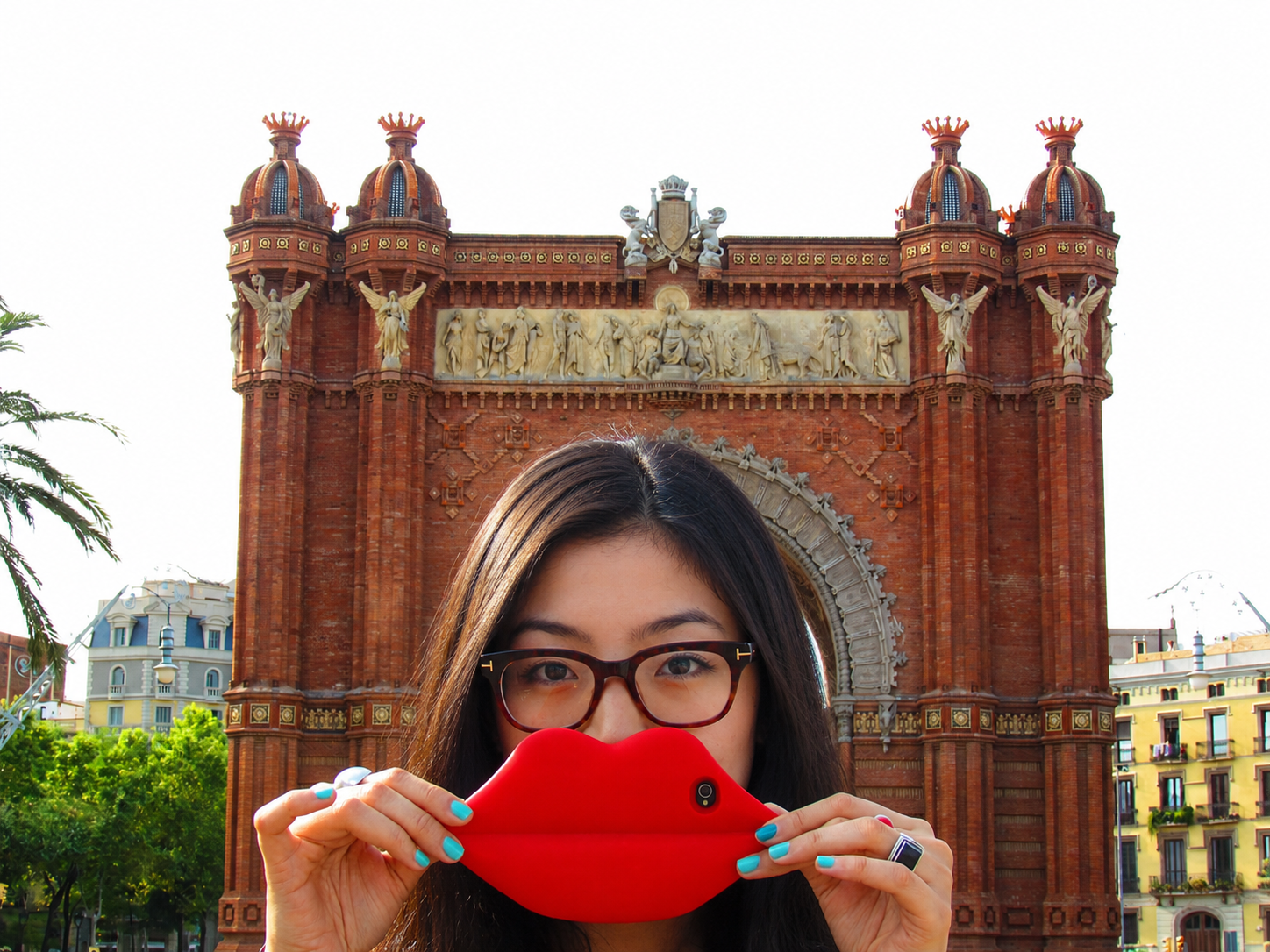
- Golden hour is usually the most atmospheric time for photos.
Before you leave, stand in the middle
Find a safe place along the pedestrian promenade and turn toward the Arc. Stop walking. Watch.
Someone will probably cross your view. Then another. A bicycle. A runner. A dog. A skateboard. A tourist attempting the perfect photograph. And suddenly the true beauty of Arc de Triomf becomes obvious.
The monument was built in 1888 to welcome people into a great international gathering. More than a century later, people are still gathering beneath it. The exhibition disappeared. The invitation survived.
Arc de Triomf FAQ
Do you need tickets for Arc de Triomf?
No. Barcelona's Arc de Triomf is outdoors and free to visit. You can walk around it and beneath it at any time.
Why was Barcelona's Arc de Triomf built?
It was built as the monumental entrance to the 1888 Universal Exhibition, not to celebrate a military victory.
How long do you need at Arc de Triomf?
Allow 20-45 minutes for the arch and promenade. Add more time if you continue into Parc de la Ciutadella or El Born.
What is the best route from Arc de Triomf?
Approach from Passeig de Sant Joan, walk beneath the arch, continue along Passeig de Lluis Companys, and enter Parc de la Ciutadella.